Gap funding is a second loan that pays part of the cash a first-lien flip loan leaves to you: down payment, closing costs or reserves. It raises return on cash and lowers profit. With JFG, gap or second-lien funding needs separate approval and first-lender consent. Gap pricing is not published; rates here are inputs.
- What a gap loan covers
- Down payment, closing costs, reserves
- Lien position
- Second, behind the flip loan
- JFG position
- needs separate approval and first-lender consent
- Gap rate and points
- Not published; quoted deal by deal
- Recording a second mortgage, Cook County
- $107 per mortgage or release
- Example trade
- $3,857 of profit for $30,000 less cash in
Program terms as of November 26, 2026. Rates as of November 25, 2026.
On this page
- What does a gap loan pay for on a flip?
- Where does the second lien sit behind the first?
- Why does the first lender get a veto?
- What goes into a subordination or intercreditor agreement?
- How do you price a gap loan when no one publishes rates?
- What does the same bungalow earn with and without the gap loan?
- How much more fragile is a flip with two lenders?
- When is your own cash, a partner or a smaller deal the better route?
- What to send when you ask for gap funding
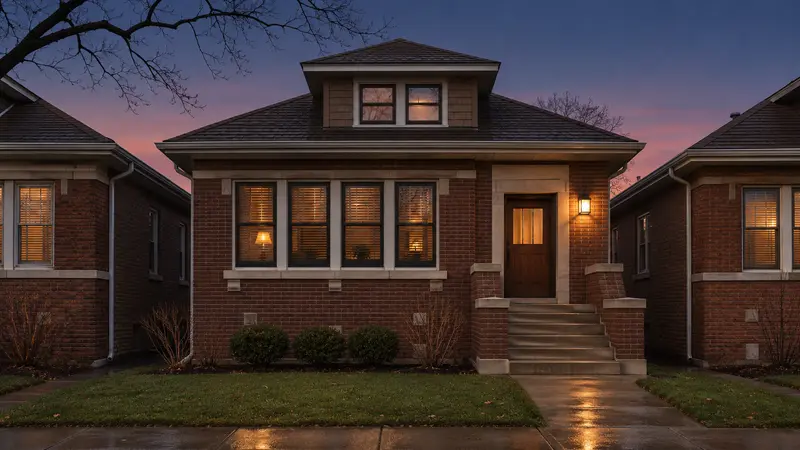
A flip loan sized at up to 90% of purchase price plus 100% of approved rehab, capped at 75% of supported ARV still leaves a cash bill: the slice of the price the loan does not reach, closing costs, points, interest and a contingency. On the bungalow below that bill is $63,106. Gap funding shrinks it. The question is what the shrinking costs.
This page is published by a lender, Jaken Finance Group. It runs one house through both structures and says where a second loan is the wrong tool.
What does a gap loan pay for on a flip?
A gap loan pays for the part of the project the first-lien loan leaves to the borrower: the down payment, the cash due at the closing table, and reserves.
In the example the first lien advances 90% of the price and the other $24,000 is yours. Closing costs and points come next; the page on cash due at closing itemizes them. Reserves are the weakest use: you pay interest on money you hope not to spend.
A gap loan does not replace draw float: the rehab holdback is released after inspection, so you still front each phase.
Where does the second lien sit behind the first?
A gap loan secured by the property is a second lien: a mortgage recorded after the first lender's. Illinois sets priority by recording. Under the Conveyances Act, 765 ILCS 5/30, a mortgage takes effect against later creditors from the time it is filed for record.
The Illinois Mortgage Foreclosure Law, 735 ILCS 5/15-1512, applies sale proceeds to sale expenses, then preservation costs, then claims in the priority set by the judgment. The gap lender collects only after the first lien is paid in full, which is why it charges more and wants a personal guarantee.
Why does the first lender get a veto?
The first lender gets a veto because its loan documents say so, and no federal rule overrides them on investment property. Federal regulation bars a lender from calling a loan due over a junior lien only on a home the borrower occupies or will occupy (12 CFR 191.5(b), text read November 2026). A flip is non-owner-occupied, so the clause in the note controls.
A second lien means a borrower with less cash at risk and another payoff to clear at resale. JFG's published position is that gap or second-lien funding needs separate approval and first-lender consent. Ask in the first call and get the answer in the term sheet.
An unsecured gap loan or business credit line records no lien, so it needs no subordination. It is still debt with payments, and it belongs on the first lender's application with your other liabilities.
What goes into a subordination or intercreditor agreement?
A subordination agreement is the signed document in which the gap lender accepts second position. An intercreditor agreement is the longer version, and it usually settles four points:
- Payment order. The first lien is paid in full before the second receives proceeds.
- Standstill. The gap lender agrees not to foreclose or sue for a set period after a default.
- Draws. Future holdback advances keep first priority.
- Changes. Neither lender raises its balance or extends without the other's consent.
The standstill and the extension clause matter most if the project runs past maturity.
How do you price a gap loan when no one publishes rates?
Price a gap loan by asking for four numbers: rate, points, flat fees and whether interest is paid monthly or at payoff. Treat any figure online as someone's input.
Illinois law leaves the rate to negotiation: the Interest Act, as amended August 15, 2025, exempts business loans from its general cap. Two local items are fixed. The Cook County Clerk charges $107 per mortgage or release, and a mortgage on Cook County investment property needs a certificate of exemption from the Anti-Predatory Lending Database to record (765 ILCS 77/78).
| Item | Figure | Source | Effective |
|---|---|---|---|
| Cook County mortgage / release recording fee | $107 per mortgage or release | Cook County Clerk | 2024-04-01 |
| APLD treatment of investment property loans | Exempt, but a certificate of exemption is required to record the mortgage | Illinois General Assembly (ilga.gov) | 2015-01-01 |
| Federal limit on calling a loan due over a junior lien | Applies only to a home occupied or to be occupied by the borrower | eCFR / Office of the Comptroller of the Currency | 2026 |
Rules that apply to a second mortgage on a Cook County flip
The JFG capital stack calculator layers a first lien, a second and equity. Our first-lien-only deal analyzer gives the base profit to subtract the gap cost from.
What does the same bungalow earn with and without the gap loan?
With your own cash the bungalow earns more dollars; with a gap loan it earns a higher percentage on less cash. The first lien is identical in both cases: $278,000, set by cost because it sits under the $303,750 ARV cap. The page on which limit binds explains that test.
A $240,000 Dunning bungalow, funded two ways
Same house, same first-lien loan, same 6-month hold. Only the source of $30,000 of the cash changes. Inputs are illustrative, not an offer.
Capital stack with the gap loan
| Line | Amount | How it is figured |
|---|---|---|
| First-lien flip loan | $278,000 | 90% of $240,000 plus 100% of $62,000 |
| Gap loan, second lien | $30,000 | covers the $24,000 down payment and some closing costs |
| Your cash | $33,106 | $63,106 without the gap loan |
| Money needed before resale | $341,106 |
Line items sum to the stated result. Checked in code at build.
Cost of the gap loan over 6 months
| Line | Amount | How it is figured |
|---|---|---|
| Gap interest | $2,100 | $30,000 x 14% / 12 x 6 |
| Gap points | $900 | 3 points |
| Document and legal fee | $750 | subordination paperwork |
| Recording the second mortgage | $107 | Cook County Clerk |
| Gap loan cost | $3,857 |
Line items sum to the stated result. Checked in code at build.
Profit and return at a $405,000 resale
| Line | Amount | How it is figured |
|---|---|---|
| Profit with your own cash | $39,221 | after $365,779 of total cost |
| Less the gap loan | -$3,857 | profit given up |
| Return on cash, own cash | 62.15% | on $63,106 |
| Return on cash, with gap | 106.82% | on $33,106 |
| Profit with the gap loan | $35,364 |
Line items sum to the stated result. Checked in code at build.
If the resale lands 7% lower
| Line | Amount | How it is figured |
|---|---|---|
| Profit with your own cash | $12,415 | resale of $376,650 |
| Less the gap loan | -$3,857 | owed in full at any price |
| Return on cash, own cash | 19.67% | |
| Return on cash, with gap | 25.85% | |
| Profit with the gap loan | $8,558 |
Line items sum to the stated result. Checked in code at build.
The gap loan costs $3,857 and removes $30,000 from your cash. It helps the percentage and hurts the dollars.
Assumptions
- First-lien rate of 10.9% and 2 points are inputs inside the published ranges of 8.99%-13.5% and 1-3 points, not a quote.
- Gap rate of 14%, 3 points and the $750 fee are illustrative inputs. No gap pricing is published.
- Gap interest and points accrue and are paid from sale proceeds. Monthly payments would raise your cash need.
The gap loan replaces 47.5% of the cash. Profit falls from $39,221 to $35,364, and return on cash rises from 62.15% to 106.82%. That trade pays only if the freed $30,000 funds a second deal.
How much more fragile is a flip with two lenders?
A gap-funded flip loses its return faster when the resale disappoints, because the gap cost is fixed while profit is not. In the last table a 7% lower resale takes the own-cash return to 19.67% and the gap-funded return to 25.85%.
Time does the same damage. Each extra month adds $350 of gap interest on top of the first-lien carry. Two lenders also means two approvals for any extension and two payoff letters before the title company can close your sale; see liens and title at closing.
When is your own cash, a partner or a smaller deal the better route?
Your own cash is the better route whenever you have it and no second deal is waiting for it.
| Your situation | Better route | Why |
|---|---|---|
| Cash covers the deal, nothing else under contract | Own cash | Full profit, one lender |
| A second deal is under contract | Gap loan, with first-lender consent | Less profit per house, two houses working |
| First lender prohibits junior liens | Partner equity | No lien, no consent |
| You want skills as well as money | Money partner or JV | A split costs less in a bad outcome |
| You have home equity | Cash or a HELOC | No second lien on the flip |
When gap funding will not work
Gap funding fails when the combined debt leaves no room for error. If the first lien plus the gap loan approaches the resale price net of selling costs, a modest price miss means proceeds cannot clear both payoffs and the sale stalls.
The better route is a cheaper house your cash can carry, or a partner who shares the downside instead of holding a lien. The other financing comparisons price those options.
What to send when you ask for gap funding
Ask the first lender before you shop for the second.
- Fill in the worksheet that totals closing cash so the gap is a figure, not a guess.
- Send the first lender the proposed second: amount, source, lien or no lien.
- Get the consent terms in writing, including who drafts the subordination agreement.
- Submit the JFG gap lending request if you want JFG to review the second position.
- Have your attorney read both notes and the intercreditor terms before earnest money is at risk.
This is general education, not legal advice. Confirm lien priority and loan covenants with Illinois counsel.
Questions: With vs without gap funding
Is a gap loan the same thing as 100% financing?
No. A gap loan can bring the borrowed share of a project close to all of it, but you still owe what no lender funds up front: interest during the hold, overruns and work you pay for before each draw. In this page's example the gap-funded investor still carries $33,106. See whether full financing exists for what the phrase means.
Can I add a gap loan after closing without telling the first lender?
You should not, and the public record makes it visible anyway. A second mortgage is recorded with the Cook County Clerk against the same PIN, so a title update before any draw will show it. Flip loan documents commonly treat an unapproved junior lien as a default. JFG's stated position is that gap or second-lien funding needs separate approval and first-lender consent. Ask first.
Does a gap lender check credit or experience?
Expect both, plus a personal guarantee. A second-lien lender is paid after the first in a foreclosure, so it leans harder on the borrower than on the building: liquidity, track record, exit plan and the cushion between total debt and resale value. Some ask for a pledge of the LLC interest or a lien on another property, which the first lender must also approve.
Can the seller carry the gap instead of a lender?
A seller can take back a second mortgage for part of the price, and it sits in the capital stack like a gap loan. The same consent rule applies: the first lender must approve the junior lien and will usually want the seller to sign a subordination agreement. It also changes how the first lender views your equity, so disclose it in the first conversation.
Should a first-time flipper use gap funding?
Usually not on the first deal. A first project is where budget and schedule are least reliable, and a second lien removes the cash cushion that absorbs those misses. JFG's published stance is that first-time flippers are reviewed; maximum leverage is not assured, and a second lien is one more thing to approve. A cheaper house or a partner with cash is a steadier start.
Local rates and rules cited on this page
| Item | Figure | Primary source | Effective |
|---|---|---|---|
| Cook County mortgage / release recording fee | $107 per mortgage or release | Recording Fees (Cook County Clerk) | 2024-04-01 |
| Chicago transfer tax, City portion (buyer) | $3.75 per $500 of price | Real Property Transfer Tax (7551) (City of Chicago Department of Finance) | 2008-04-01 |
| Chicago transfer tax, CTA portion (seller) | $1.50 per $500 of price | Real Property Transfer Tax (7551) (City of Chicago Department of Finance) | 2008-04-01 |
| Cook County real estate transfer tax | $0.25 per $500 of value | Transfer Fees (Cook County Clerk) | 1968-01-01 |
| Illinois state real estate transfer tax | $0.50 per $500 of value | 35 ILCS 200/31-10, Imposition of tax (Illinois General Assembly) | 2005-06-01 |
Rates as of November 25, 2026. Confirm with the agency before relying on any figure.
Sources
- 765 ILCS 5/30, Conveyances Act: effect of recording, Illinois General Assembly, current text, accessed 2026-11-25.
- 735 ILCS 5/15-1512, Application of Proceeds of Sale and Surplus, Illinois General Assembly, current text, accessed 2026-11-25.
- 12 CFR 191.5, Limitation on exercise of due-on-sale clauses, eCFR / Office of the Comptroller of the Currency, 2026.
- Recording Fees, Cook County Clerk, 2024-04-01.
- 765 ILCS 77/78, Anti-Predatory Lending Database exemption, Illinois General Assembly, 2015-01-01.
- 815 ILCS 205/4, Interest Act, Illinois General Assembly, 2025-08-15.