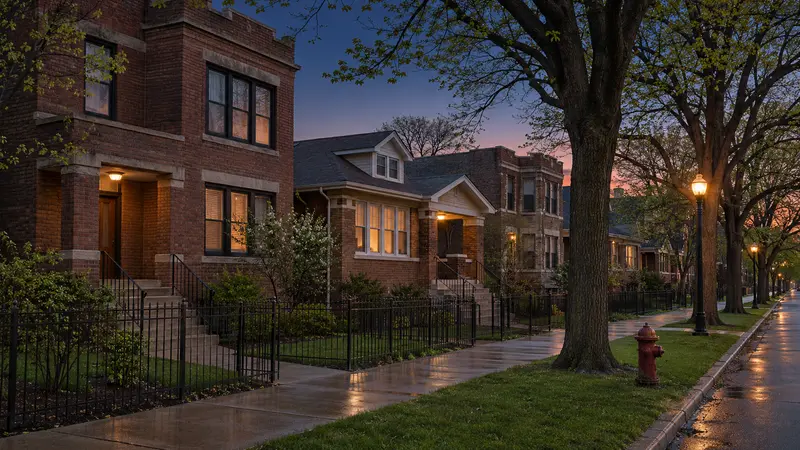
A Chicago flip is priced against sales of the same kind of building. The two-flat page puts it plainly: a two-flat is valued off other two-flats, because its likeliest buyer is an owner-occupant who wants the second unit's rent. That is why this section is organized by building and not by budget. Each of the nine pages takes one type, names the decision that type forces, and prices that decision on a single example.
Flat buildings: two units, three units and a stone front
If you are new to Chicago's housing stock, start with the two-flat. It covers the Assessor class the building falls in, who buys the finished product, and what two sets of mechanicals do to a budget. Names such as two-flat, greystone and workers cottage are defined in the glossary's building terms. The three-flat page builds on it: the third floor adds a second-exit requirement, a rent test for FHA buyers and a condo-conversion option. For any flat building with a limestone face, the page on greystone masonry and schedule shows how a specialty mason and a longer timeline change the margin. Read all three with brick, porch and lintel permits open, since a rear porch, a second exit or a parapet comes up in each.
Houses: bungalow, cottage and full gut
The three house pages each turn on a different question. For a bungalow it is whether to build out the attic, and the page prices one house with and without a dormer. For a frame workers cottage it is whether you bought a house or a lot. For a full gut of a single-family home it is the loan itself: the holdback becomes most of the loan and the ARV cap usually sizes it. Before you count on added space in any of them, check the four zoning tests.
Edge cases: a unit, a storefront and a fifth apartment
Three pages cover buildings where someone else's rules decide the deal. A condo unit is underwritten twice, once by your lender and once by your buyer's lender looking at the association. A storefront with apartments above has to pass separate tests from the Assessor, the zoning code and the lender. And the four-or-five unit line maps which loan, tax and landlord rules switch as the unit count rises; read it before you add or remove a unit.
From a type to a block and a budget
These pages describe buildings, not locations. To see what a type sells for in a given part of the city, use the community area sale medians, which report single-family, two-to-six unit and condo sales separately for 20 areas. Two of them are worth opening beside a type page: Portage Park's owner-occupied houses with the bungalow page, and the Near West Side condo counts with the condo page.
Two items on this site take a type page's scope and turn it into a document. The seventeen-line budget form is built for two-unit buildings and checks the total against the loan limits. The trade-by-trade scope sheet works for any type and is the format a lender reviews.
Outside this section
Type pages do not settle whether to sell or keep the finished building. The three-flat page treats holding as a real alternative to selling, and the comparison section works through the sell-or-hold math on one building. Permit timing, lead paint and landmark review each have a page in the Chicago rules, and the type pages link to them where they apply.
The nine building types
- Flipping a two-flatWhat sets a two-flat flip apart: the class 2-11 sales pool, the owner-occupant buyer who drives comps, where deconversion is barred, and what two sets of mechanicals do to the budget.
- Flipping a three-flatThe third floor adds a second-exit requirement, a rent test for FHA buyers and a condo-conversion option, and it makes holding the building a real alternative to selling it.
- Flipping a greystoneA greystone is a brick building with a limestone face, so the flip carries a specialty masonry scope, preservation checks and a longer schedule. This page prices that difference.
- Flipping a bungalowA bungalow flip turns on one decision, whether to build out the attic. This page prices both scopes on one house and shows what zoning, layout and the buyer pool do to each.
- Flipping a workers cottageOn a narrow-lot frame cottage the land can outbid the house. This page shows how to tell which you bought, what demolition triggers, and how the two outcomes compare in dollars.
- Single-family gut rehabWhy a gut flips the loan's proportions: a holdback larger than the purchase advance, a plan-review wait before demolition, and an ARV cap that decides your cash at closing.
- Condo unit flipsWhat an association adds to a Chicago flip: the Section 22.1 package, assessments as carry lines, lender review of the building, rental limits and the 85% bulk-sale vote.
- Storefront with apartmentsThree separate tests decide how a storefront-and-flats building is taxed, used and financed, with the property tax gap between class 2 and class 5 computed on one value.
- Four units versus fiveA line-by-line map of which loan, tax, disclosure and landlord rules switch at four, five, six and seven units, with a four-flat DSCR refinance computed as the baseline.