EPA's Renovation, Repair and Painting rule treats a flipper as a paid renovator, so the firm doing the work must be certified and a trained renovator must run the job. Firm certification costs $300 and lasts 5 years. The civil penalty ceiling is $49,772 per violation per day, and resale triggers a separate disclosure rule.
- Who the rule covers
- Paid work disturbing paint in housing built before 1978
- Firm certification
- $300 to EPA, renewed every 5 years
- Renovator course
- 8 hours (at least 2 hours hands-on)
- Interior threshold
- 6 square feet or less per room
- Exterior threshold
- 20 square feet or less
- Records
- Keep 3 years after completion
- Penalty ceiling
- Up to $49,772 per violation, per day
- Buyer's inspection window at resale
- 10 days (unless the parties agree in writing to a different period)
Program terms as of November 26, 2026. Rates as of November 25, 2026.
On this page
- Does the RRP rule reach an investor who never lives in the house?
- Who needs the certificate: the company, a person or both?
- How much painted surface can you disturb before the rule applies?
- What does a compliant work day look like on site?
- Which papers prove you followed the rule?
- What does compliance cost next to the penalty?
- What do you owe the buyer when you sell the finished house?
- Where do Illinois and Chicago's health department come in?
- What should your contractor agreement require?
- What is the next step on a pre-1978 purchase?
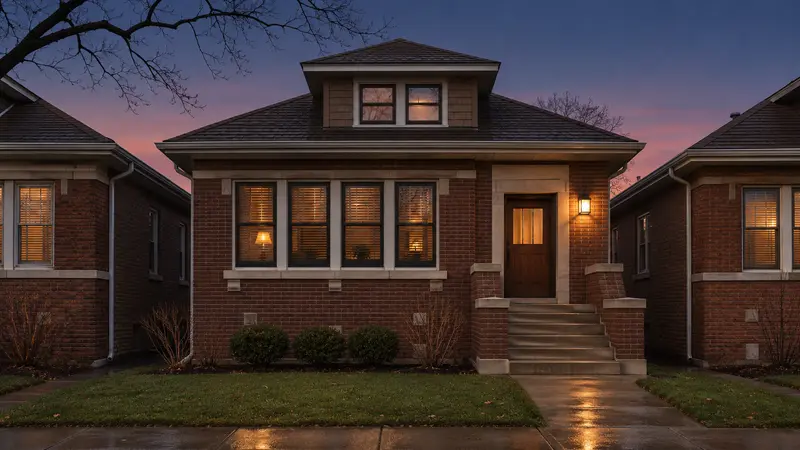
If the house is a brick bungalow, a frame cottage or a two-flat, assume it was built before 1978 until the Assessor's record says otherwise. That puts the rehab inside a federal lead rule that is easy to mistake for a rule about contractors in occupied homes.
Three regimes overlap. EPA's RRP rule governs the work, a federal disclosure rule governs the resale, and Illinois and the Chicago Department of Public Health step in when a hazard has been cited. This is general education from a lender; confirm your own job with an environmental attorney.
Does the RRP rule reach an investor who never lives in the house?
Yes. EPA's program page says the rule generally skips homeowners working on their own homes but does apply if you buy, renovate and sell homes for profit, and it names house flippers. Its stated coverage: Paid work disturbing paint in housing built before 1978.
A homeowner's exception is no help on non-owner-occupied investment property. EPA runs the program directly in Illinois, which is not among the states it has authorized to operate their own.
Who needs the certificate: the company, a person or both?
Both. The firm that performs the renovation must be EPA certified, and a certified renovator must be assigned to the project.
- Firm. Certification costs $300 under EPA's fee schedule and runs 5 years.
- Renovator. The initial course is 8 hours (at least 2 hours hands-on).
The certified renovator does not have to swing every hammer. That person trains the other workers on the job, directs the lead-safe tasks and performs the cleaning verification. If you hire a general contractor, the firm certificate you need to see is the contractor's. If your LLC employs the crew, the firm is you.
How much painted surface can you disturb before the rule applies?
Very little. The minor repair and maintenance definition exempts interior work of 6 square feet or less per room and exterior work of 20 square feet or less. Window replacement and demolition of painted surfaces never count as minor, and neither does any job using a prohibited practice.
A flip that replaces windows, opens walls or strips trim is over the line on the first day. When you size the job using rehab cost by scope, carry lead-safe setup as its own line.
What does a compliant work day look like on site?
It looks like contained dust. The work practice standards require the firm to:
- Post warning signs before work starts and keep them up until cleaning verification is done.
- Indoors, remove or cover belongings, close and cover ducts, doors and windows, and lay floor plastic 6 feet beyond the work surface.
- Outdoors, cover the ground 10 feet beyond the work surface and add vertical containment when work is within 10 feet of the lot line, which a narrow gangway usually is.
- Avoid open-flame burning, heat guns at 1,100 degrees or hotter, and power sanding or grinding without a shroud and HEPA attachment.
- Bag waste, clean with a HEPA vacuum and wet wiping, then have the certified renovator verify the cleaning against EPA's verification card.
Which papers prove you followed the rule?
The job file does. Firms must keep compliance records for 3 years after completion and produce them to EPA on request. The file holds the firm certificate, the renovator's course certificate, any test kit or inspection results, the signed pamphlet acknowledgment and a record that the renovator trained workers, directed the work and verified the cleaning.
| Rule | Published requirement |
|---|---|
| Pamphlet timing | Deliver no more than 60 days before work; if mailed, at least 7 days before |
| Record retention | 3 years after completion |
| Renovator refresher | 4 hours; Refresher within 5 years of the initial course |
| Seller's disclosure file | Keep 3 years from closing or lease start |
Ask for a copy of the file with the final draw request. The way draw inspections are documented is a natural place to collect it.
What does compliance cost next to the penalty?
On the inputs below, $2,133 against a ceiling of $49,772 per violation per day. Only the firm fee is a published number; the rest are yours to replace.
Compliance lines on a 1920s bungalow where your own LLC runs the crew
Only the EPA fee is a published figure. Every other line is an input you replace with your own quote.
What compliance costs on one job
| Line | Amount | How it is figured |
|---|---|---|
| EPA firm certification | $300 | published fee; good for five years of jobs |
| Certified renovator course, one person | $295 | your input; set by the training provider |
| Plastic sheeting, tape, signs, bags | $410 | your input |
| HEPA vacuum rental | $240 | your input |
| EPA-recognized test kits | $60 | your input |
| Setup, daily cleanup and cleaning verification | $828 | 18 hours x $46 |
| Maximum civil penalty, one violation, one day | $49,772 | statutory ceiling, not a typical fine |
| Penalty ceiling as a multiple of the compliance cost | 23 | times |
| Compliance cost, first job | $2,133 |
Line items sum to the stated result. Checked in code at build.
One violation on one day can be priced at up to about 23 times what doing the job by the rule cost here.
Assumptions
- Course fee, supplies, rental and labor are illustrative inputs supplied by the reader, not sourced prices.
- The penalty line is the legal maximum per violation per day. Actual penalties depend on EPA's enforcement policy and the facts.
Add your own lines to the full cost-stack analyzer so the cost sits in the budget, not in contingency.
What do you owe the buyer when you sell the finished house?
A separate federal rule applies to these transactions: Sales and leases of housing built before 1978. Before the buyer is bound, EPA's disclosure guidance requires you to hand over the "Protect Your Family From Lead in Your Home" pamphlet, disclose what you know about lead paint and hazards, provide every available record and report, and include the Lead Warning Statement in the contract. The buyer gets an inspection opportunity of 10 days (unless the parties agree in writing to a different period).
Two points catch flippers. New paint and new windows do not make the house lead free. And test results from your own renovation are reports you must provide. EPA's disclosure questions and answers add the private remedy: a seller or agent who withholds the required information can be sued for triple the buyer's damages.
Where do Illinois and Chicago's health department come in?
They enforce hazards, not renovation methods. The Illinois Lead Poisoning Prevention Act lets the Department of Public Health or a delegate agency serve a mitigation notice when an inspection finds a lead hazard. The deadline to mitigate is 30 days where a child 6 or younger or a pregnant person lives in the unit; otherwise 90 days. An owner under a notice must give a prospective purchaser the notice and inspection report before a sales contract, unless a certificate of compliance has been issued.
In the city, the Chicago Department of Public Health says its lead division takes its mandate from that Act, sends a licensed risk assessor to homes where a child has a confirmed positive blood test, and enforces through the courts. The City also has a filing of its own: the Department of Buildings' permit terms for existing buildings warn that a separate Lead-based Paint Renovation, Repair and Painting form may be due at CDPH before paint-disturbing work begins. Ask the seller in writing whether any notice exists, and check it alongside open building violations.
What should your contractor agreement require?
- A copy of the firm's current EPA certificate, attached to the contract.
- The name and course certificate of the certified renovator assigned to your address.
- A lead-safe setup and cleanup line in the scope of work, priced separately.
- No demolition before containment is up and the renovator is on site.
- Delivery of the full RRP job file with the final payment application.
Score these items when you use the bid leveling sheet.
Where the plan falls apart
Acting as your own general contractor with day labor and no certificate does not work. Your LLC becomes the uncertified firm, each day of uncontained work is its own exposure, and a City permit path built on a licensed general contractor is broken as well. The better route is a certified contractor under a written scope, or getting your own firm certified and one supervisor trained before the first job.
What is the next step on a pre-1978 purchase?
Confirm the build year, then ask each bidder for the firm certificate before you ask for a price. If you plan to keep the building as a rental instead of selling, the pamphlet and disclosure duties continue with every lease, and the tenant rules for held property apply on top.
New investors can read JFG's guide to starting flips in Chicago, and the lender's Illinois fix and flip program page covers financing outside the city. More local rules are indexed on the Chicago rules page.
Questions: Lead paint and the RRP rule
Does the RRP rule apply if the house is vacant during the rehab?
Yes. Coverage turns on the age of the housing and on the work being done for compensation, not on who is living there. EPA states that people who buy, renovate and sell homes for profit are covered. A vacant house changes logistics, since there are no occupants to notify or keep out, but certification, containment, cleaning and records still apply.
Can I test the paint and skip the lead-safe work practices?
Sometimes. The rule does not apply to components that a certified inspector or risk assessor has determined in writing to be free of lead-based paint, or that a certified renovator has tested with an EPA-recognized kit and found below the regulatory level. The exemption is component by component, and the test record must be kept with the job file. Remember that a report you obtain becomes a record you must hand to your buyer.
Is an RRP certified firm the same as a lead abatement contractor?
No. RRP certification is a federal credential for renovation that happens to disturb paint. Abatement is work whose purpose is to remove or control a lead hazard, and in Illinois it is licensed by the Department of Public Health, with a $500 (non-refundable) contractor license fee. If a building carries an open mitigation notice, Illinois law generally requires licensed abatement personnel for work that disturbs the cited surfaces, so your regular contractor may not qualify.
Do I have to give myself the Renovate Right pamphlet?
The pamphlet duty runs from the renovation firm to the owner and occupants of the dwelling, on this schedule: Deliver no more than 60 days before work; if mailed, at least 7 days before. When your contractor is the firm and your LLC is the owner, the contractor should hand you the pamphlet and keep your signed acknowledgment. If tenants remain in a multi-unit building, they get it too.
Does buying at a foreclosure sale change my lead obligations?
It changes what you receive, not what you owe. EPA lists foreclosure sales among the transactions the disclosure rule does not cover, so you may get no lead information at all when you buy at auction. When you resell the finished house in an ordinary sale, you are a seller under the rule and owe the buyer the pamphlet, the warning statement, known information and any reports.
Local rates and rules cited on this page
| Item | Figure | Primary source | Effective |
|---|---|---|---|
| EPA RRP rule coverage | Paid work disturbing paint in housing built before 1978 | Lead Renovation, Repair and Painting Program (U.S. Environmental Protection Agency) | 2026 |
| EPA RRP firm certification fee | $300 | EPA Certification Program: Fees for Renovation Firms and Abatement Firms (U.S. Environmental Protection Agency) | 2026-11-10 |
| EPA RRP firm certification term | 5 years | 40 CFR 745.89 - Firm certification (eCFR / U.S. Environmental Protection Agency) | 2026 |
| Certified renovator initial course | 8 hours (at least 2 hours hands-on) | 40 CFR 745.225 - Accreditation of training programs (eCFR / U.S. Environmental Protection Agency) | 2026 |
| RRP minor repair exemption, interior | 6 square feet or less per room | 40 CFR 745.83 - Definitions (eCFR / U.S. Environmental Protection Agency) | 2026 |
| RRP minor repair exemption, exterior | 20 square feet or less | 40 CFR 745.83 - Definitions (eCFR / U.S. Environmental Protection Agency) | 2026 |
| RRP interior floor containment | 6 feet beyond the work surface | 40 CFR 745.85 Work practice standards (eCFR / U.S. Environmental Protection Agency) | 2026 |
| RRP exterior ground containment | 10 feet beyond the work surface | 40 CFR 745.85 Work practice standards (eCFR / U.S. Environmental Protection Agency) | 2026 |
| RRP record retention | 3 years after completion | 40 CFR 745.86 - Recordkeeping and reporting requirements (eCFR / U.S. Environmental Protection Agency) | 2026 |
| RRP pre-renovation pamphlet (Renovate Right) | Deliver no more than 60 days before work; if mailed, at least 7 days before | 40 CFR 745.84 - Information distribution requirements (eCFR / U.S. Environmental Protection Agency) | 2008-12-22 |
| Certified renovator refresher course | 4 hours | 40 CFR 745.225 - Accreditation of training programs (eCFR / U.S. Environmental Protection Agency) | 2026 |
| Certified renovator recertification period | Refresher within 5 years of the initial course | 40 CFR 745.90 - Renovator certification and dust sampling technician certification (eCFR / U.S. Environmental Protection Agency) | 2026 |
| Lead disclosure record retention | 3 years from closing or lease start | 40 CFR 745.113 - Certification and acknowledgment of disclosure (eCFR / U.S. Environmental Protection Agency) | 2026 |
| Federal lead disclosure rule coverage | Sales and leases of housing built before 1978 | 40 CFR Part 745 Subpart F - Disclosure of Known Lead-Based Paint and/or Lead-Based Paint Hazards Upon Sale or Lease of Residential Property (eCFR / U.S. Environmental Protection Agency) | 2026 |
| Buyer's lead inspection opportunity | 10 days (unless the parties agree in writing to a different period) | 40 CFR 745.110 - Opportunity to conduct an evaluation (eCFR / U.S. Environmental Protection Agency) | 2026 |
| Illinois deadline to mitigate a cited lead hazard | 30 days where a child 6 or younger or a pregnant person lives in the unit; otherwise 90 days | Lead Poisoning Prevention Act, 410 ILCS 45 (Illinois General Assembly) | 2023-01-01 |
| TSCA civil penalty (RRP and lead disclosure violations) | Up to $49,772 per violation, per day | 40 CFR 19.4 - Statutory civil monetary penalties, as adjusted for inflation (eCFR / U.S. Environmental Protection Agency) | 2025-01-08 |
| Illinois lead abatement contractor license fee | $500 (non-refundable) | License Qualifications for Lead Abatement Contractor (Illinois Department of Public Health) | 2026 |
Rates as of November 25, 2026. Confirm with the agency before relying on any figure.
Sources
- Lead Renovation, Repair and Painting Program, U.S. Environmental Protection Agency, 2026.
- 40 CFR 745.85 Work practice standards, eCFR / U.S. Environmental Protection Agency, 2026.
- 40 CFR 745.83 Definitions (minor repair and maintenance), eCFR / U.S. Environmental Protection Agency, 2026.
- EPA Certification Program Fees for Renovation Firms and Abatement Firms, U.S. Environmental Protection Agency, 2026-11-10.
- Real Estate Disclosures about Potential Lead Hazards, U.S. Environmental Protection Agency, 2026.
- Lead Poisoning Prevention Act, 410 ILCS 45, Illinois General Assembly, sections 9 and 9.1 as amended effective 2023-01-01.
- Frequent Questions About the EPA/HUD Real Estate Notification and Disclosure Rule, U.S. Environmental Protection Agency, 2026.
- Work on Existing Buildings and Structures (plan-based permit terms), City of Chicago Department of Buildings, 2026.
- Lead Poisoning Prevention, Chicago Department of Public Health, 2026.