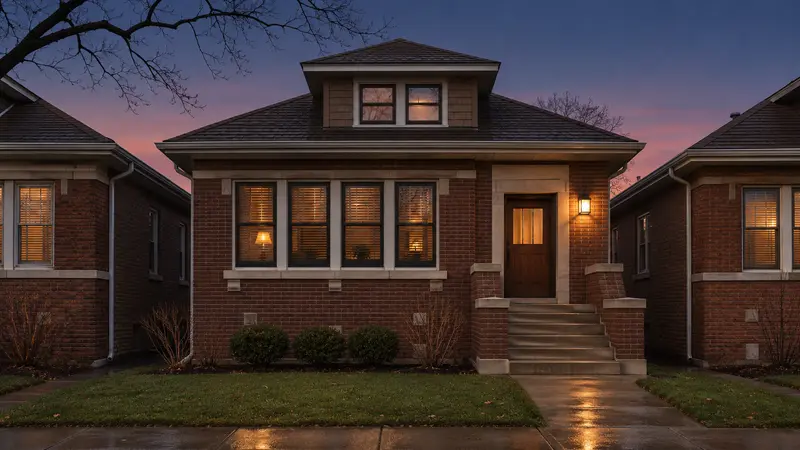
A plan-based Chicago rehab permit took a median 94 days on Standard Plan Review and 27 days on Self-Certification over the last 24 months of city records. A quarter of Standard Plan Review permits took longer than 161 days. On the example loan, the median wait costs $10,205 and the slow-quartile wait $17,478.
- Standard Plan Review, median to issue
- 94 days (5,535 permits)
- Self-Certification, median to issue
- 27 days (4,995 permits)
- Standard Plan Review, slowest quarter
- more than 161 days
- Plan-based application deposit
- $600 non-refundable
- Stop work order penalty in the code
- 200% of the regular permit fee
- Inspection request lead time
- At least 4 business days
Program terms as of November 26, 2026. Rates as of November 25, 2026.
On this page
- Which review path does a flip rehab scope land on?
- What rehab work needs no permit at all?
- How long does each path take from application to issuance?
- Is Standard Plan Review getting slower?
- What does the permit wait cost on a flip loan?
- Who is allowed to pull the permit on an investment property?
- What happens if work starts without a permit?
- How do open violations and inspections change the schedule?
- How should you sequence the permit against your closing?
The permit is the one line on a flip schedule you cannot buy your way out of. What you control is which review path your scope lands on, when the application goes in, and who is listed on it. Those choices decide whether the building sits for three weeks or five months with interest running.
The Department of Buildings (DOB) runs four paths: the Express Permit Program, Standard Plan Review, Self-Certification and Developer Services. This page is general education, not legal or design advice. Confirm your scope with a licensed Illinois architect and the DOB before you set a closing date around it.
Which review path does a flip rehab scope land on?
Scope decides the path, not budget. Work with no architectural drawings goes Express. Anything that needs stamped plans goes to Standard Plan Review unless your architect is registered to self-certify.
| Your scope | Path | City rule |
|---|---|---|
| Reroof, masonry, porch repair, window swaps, nonstructural interior alteration, electrical, plumbing, HVAC | Express Permit Program | Guided online worktypes, no plans |
| Gut with new layout, structural work, additions, dormers, added units | Standard Plan Review | Fewer than 50 dwelling units; new buildings up to 80 feet |
| The same plan-based scope, certified by the design professional | Self-Certification | Registered Illinois architect or structural engineer |
| Very large buildings | Developer Services | 50 or more dwelling units |
The Express Permit Program replaced the paper Easy Permit in November 2023, so a guide telling you to pull an "Easy Permit" is out of date. Standard Plan Review assigns a project manager and needs zoning approval first, which is where added units and dormers get decided. Landmark and orange-rated buildings carry a separate landmark and demolition-delay review.
What rehab work needs no permit at all?
A cosmetic flip can be largely permit-free. The City's list of permit-exempt work includes:
- Finishes: Paint, tile, carpet, cabinets and countertops, with no plumbing or electrical connections.
- Drywall or plaster replacement: Up to 1,000 square feet, if no building system is altered.
- In-kind windows and doors: Residential buildings up to 4 stories.
Moving a sink or adding a circuit puts the job back into Express at minimum.
How long does each path take from application to issuance?
Self-Certification issued in under a third of the Standard Plan Review time. The figures cover 10,904 renovation and alteration permits issued November 2024 through October 2026 in the City's Building Permits dataset; the all-path median was 56 days.
| Review path | Permits issued | Fastest quarter under | Median | Slowest quarter over |
|---|---|---|---|---|
| Standard Plan Review | 5,535 | 49 days | 94 days | 161 days |
| Self-Certification | 4,995 | 9 days | 27 days | 54 days |
| Developer Services (direct) | 364 | 60 days | 87.5 days | 141.3 days |
Source: City of Chicago, Department of Buildings, Building Permits (dataset ydr8-5enu), 2024-11-01 to 2026-10-31; retrieved 2026-11-26.
Two cautions. The clock runs from application start to issue date, so it includes the days your architect spends answering corrections. And this permit type excludes Express permits, which the portal counts separately (40,353 in the same window) with no comparable wait figure.
Is Standard Plan Review getting slower?
On the City's records, yes. The median Standard Plan Review wait has lengthened each year since 2024 while Self-Certification has barely moved.
| Year issued | Standard Plan Review median | Self-Certification median |
|---|---|---|
| 2024 | 68 days | 24 days |
| 2025 | 87 days | 26 days |
| 2026, January to October | 105 days | 28 days |
Source: City of Chicago, Department of Buildings, Building Permits (dataset ydr8-5enu), 2024-11-01 to 2026-10-31; retrieved 2026-11-26.
Earlier years are left out on purpose: many pre-2024 records show the same application and issue date, so their medians understate review time. A pro forma built on a 60-day assumption from an older deal is now optimistic for plan-reviewed work.
What does the permit wait cost on a flip loan?
It costs daily interest on whatever has funded, plus taxes, insurance and utilities. On a loan sized at up to 90% of purchase price plus 100% of approved rehab, capped at 75% of supported ARV, the rehab holdback is undrawn while you wait, so interest runs on the acquisition advance. That leverage never means no cash: closing costs, interest, overruns and work done ahead of draws still come from you.
Waiting on plan review with a $256,500 acquisition advance outstanding
A brick two-flat in Portage Park bought for $285,000 with a $118,000 plan-based rehab. Inputs are illustrative, not an offer.
Median Standard Plan Review wait: 94 days
| Line | Amount | How it is figured |
|---|---|---|
| Interest on the acquisition advance | $7,300 | $256,500 x 10.9% / 360 = $77.66 a day |
| Taxes, insurance, utilities | $2,905 | $940 a month = $30.90 a day |
| Same loan, Self-Certification median | $2,931 | 27 days |
| Cost of the median wait | $10,205 |
Line items sum to the stated result. Checked in code at build.
Landing in the slow quarter: 67 more days
| Line | Amount | How it is figured |
|---|---|---|
| Added interest | $5,203 | $77.66 x 67 |
| Added carry | $2,070 | $30.90 x 67 |
| Extra cost at the 75th percentile | $7,274 |
Line items sum to the stated result. Checked in code at build.
Assumptions
- Rate of 10.9% is an input inside the published range of 8.99%-13.5%, not an offer.
- Interest runs on the acquisition advance only; no rehab draws have funded. The full loan would be $374,500.
- Carry of $940 a month is a placeholder. Day counts are citywide figures, not a forecast for one file.
Run your own balance through the permit-wait cost calculator, and stack the wait on the other months of carry by hold length.
Who is allowed to pull the permit on an investment property?
On a flip, a licensed general contractor has to be on the permit. The Department's general contractor license page sets the trigger as: Required for work done for pay, as an investment, or to sell or lease. The owner-as-contractor exception is Primary residence only; one property per calendar year, which rules out an LLC-owned flip.
License class caps project value; the smallest, Class E, is $300 per year; projects up to $500,000. Plumbing and electrical contractors hold their own City licenses. On Express applications, the listed contractor must accept the job by email before the permit issues, so an unresponsive contractor stalls it.
Self-Certification depends on your architect. The program page limits it to registered professionals who completed DOB training and bars expediters from uploading those applications. The City's stated pace is 10 business days after zoning approval. Ask about registration before you hire.
What happens if work starts without a permit?
An inspector posts a stop-work order and the job stops until a permit issues and the penalty is paid. The City's work-without-permit FAQ puts it at $1,000 or more, and permit fee usually tripled. Municipal Code 14A-12-1204.4, amended December 14, 2022, sets the added penalty at 200% of the regular permit fee, and for an unlicensed or unlisted contractor at Table penalty plus $1,000.
The fee is the small part. The City can open an enforcement case and require removal of work it cannot inspect, and every lost day lands on the per-day cost in the example. Emergency stabilization can start first, with the application due the next business day.
How do open violations and inspections change the schedule?
Open violations can take the fast path away. The City's Self-Certification timing assumes no building violations or stop work orders on the property, so budget a building with a pending case at the Standard Plan Review pace. A plan-based permit also widens the scope: the City's terms for work on existing buildings require it to remedy every readily apparent violation of the minimum requirements for existing buildings (Title 14X), cited or not. Buying with open DOB violations is covered separately.
After issuance, inspections set the pace, and a failed rough inspection holds the next draw. JFG draws are staged against a rehab holdback, with inspections, so the lender's inspection and the City's are different visits; see how draws and inspections run.
Where this plan breaks
Closing first and designing later does not work on a plan-reviewed gut. Add design time to the 94 days median and you can be five months in before a wall moves, on a loan whose term is underwritten file by file, ask your loan officer.
Get the architect into the building during the contract period and choose a registered self-certification professional if the scope qualifies. If the deal only works with a 30-day permit, re-scope to Express-eligible work or pass.
How should you sequence the permit against your closing?
Treat the permit as a pre-closing workstream.
- Before you offer, sort the scope of work into Express, plan-based and no-permit items.
- Search the address in DOB records for open violations and stop work orders.
- During attorney review, hire the architect and confirm self-certification registration in writing.
- Verify the general contractor's license class and the plumber's and electrician's City licenses.
- File as early as the contract allows, with Express permits for roof, masonry or preparatory demolition in parallel.
- Schedule to the median wait for your path and reserve cash for the 75th percentile.
Plot the dates on the flip schedule template and place them in the full offer-to-payoff timeline. A single-family gut is the scope most exposed to these numbers.
For the loan side, see JFG's Chicago fix and flip program and its guide to starting flips in Chicago. Other rules that move a budget are indexed under Chicago rules for flippers.
Questions: DOB permit paths and timelines
Can I start interior demolition while the plan-based permit is still in review?
Only within limits. The City's no-permit list lets a project team open up to 1,000 square feet of plaster or drywall per building for exploration and strip finishes such as tile, cabinets and carpet. Past that, the Express Permit Program has a worktype called Preparatory Interior Demolition (Nonstructural), so the crew can clear the building legally while the architect answers corrections. Structural demolition waits for the main permit.
Does removing an illegal basement or attic unit go through plan review?
Often not. The Express Permit Program lists a guided worktype for Removal of Unpermitted Residential Unit Features, which the Department labels deconversion. That keeps a simple removal of a second kitchen off the plan review calendar. Budget the fee: the City's 2026 changes set the minimum for a permit that reduces the unit count at $1,800. Legalizing the unit instead is a zoning question first.
Will Chicago permit fees be different for a project that files in 2027?
Yes. Permit and trade license fees are indexed to inflation each year, and the Department of Buildings has posted the next schedule: New CPI-adjusted fees apply January 1, 2027. The plan-based deposit was itself raised in January 2026. A December filing and a January filing can pay different amounts for the same scope, so price the permit from the schedule in force on your filing date.
Does a rehabbed two-flat need a certificate of occupancy before I sell it?
Usually not. The Department of Buildings requires one in this case: Construction or substantial alteration of 4 or more dwelling units. A change of occupancy type also needs one. A one- to three-unit rehab closes out through passed permit inspections, and a buyer's attorney will typically ask for evidence that the permit is finaled. For four or more units, put the certificate on the schedule because it adds days after construction ends.
Which months are busiest for Chicago renovation permits?
Issuance peaks in summer and drops in winter. Across the last five full calendar years of Building Permits records, August carried 9.3% of annual renovation and alteration permits and December 6.6%. That measures issuance volume, not review speed, so it does not prove winter filings move faster. It does show when everyone else's permits land, which is also when framers, plumbers and electricians are hardest to book.
Local rates and rules cited on this page
| Item | Figure | Primary source | Effective |
|---|---|---|---|
| Standard Plan Review eligibility | Fewer than 50 dwelling units; new buildings up to 80 feet | Standard Plan Review Permit Program (City of Chicago Department of Buildings) | 2026 |
| Who can self-certify | Registered Illinois architect or structural engineer | Self-Certified Permit Application Program (City of Chicago Department of Buildings) | 2026 |
| Developer Services required threshold | 50 or more dwelling units | Developer Services Permit Program (City of Chicago Department of Buildings) | 2026 |
| No-permit finish work | Paint, tile, carpet, cabinets and countertops | What Types of Work Do Not Require a Building Permit? (Full List) (City of Chicago Department of Buildings) | 2026 |
| No-permit limit for drywall or plaster replacement | Up to 1,000 square feet | What Types of Work Do Not Require a Building Permit? (Full List) (City of Chicago Department of Buildings) | 2026 |
| No-permit in-kind window and door replacement | Residential buildings up to 4 stories | What Types of Work Do Not Require a Building Permit? (Full List) (City of Chicago Department of Buildings) | 2026 |
| General contractor license trigger | Required for work done for pay, as an investment, or to sell or lease | General Contractor License (City of Chicago Department of Buildings) | 2026 |
| Owner-as-general-contractor exception | Primary residence only; one property per calendar year | General Contractor License (City of Chicago Department of Buildings) | 2026 |
| General contractor license, Class E | $300 per year; projects up to $500,000 | General Contractor License (City of Chicago Department of Buildings) | 2026-01-01 |
| Self-Certification typical issuance time | 10 business days after zoning approval | Self-Certified Permit Application Program (City of Chicago Department of Buildings) | 2026 |
| Stop work order penalty (City guidance) | $1,000 or more, and permit fee usually tripled | What happens if I start work without a required building permit? (City of Chicago Department of Buildings) | 2026 |
| Stop work order penalty for unpermitted work (code) | 200% of the regular permit fee | Municipal Code of Chicago 14A-12-1204.4 Stop work order (American Legal Publishing (Municipal Code of Chicago)) | 2022-12-14 |
| Extra stop work penalty for unlicensed or unlisted contractor | Table penalty plus $1,000 | Municipal Code of Chicago 14A-12-1204.4 Stop work order (American Legal Publishing (Municipal Code of Chicago)) | 2022-12-14 |
| Plan-based permit application deposit | $600 non-refundable | Department of Buildings Changes for 2026 (City of Chicago Department of Buildings) | 2026-01-06 |
| Permit inspection request lead time | At least 4 business days | Permit Inspections (City of Chicago Department of Buildings) | 2026 |
| Minimum permit fee for reducing dwelling units | $1,800 | Department of Buildings Changes for 2026 (City of Chicago Department of Buildings) | 2026-01-06 |
| 2027 permit and license fee schedules | New CPI-adjusted fees apply January 1, 2027 | 2027 Fees (City of Chicago Department of Buildings) | 2027-01-01 |
| Certificate of Occupancy required | Construction or substantial alteration of 4 or more dwelling units | Certificates of Occupancy (City of Chicago Department of Buildings) | 2026 |
Rates as of November 25, 2026. Confirm with the agency before relying on any figure.
Sources
- Express Permit Program, City of Chicago Department of Buildings, 2026.
- Standard Plan Review Permit Program, City of Chicago Department of Buildings, 2026.
- Self-Certified Permit Application Program, City of Chicago Department of Buildings, 2026.
- Developer Services, City of Chicago Department of Buildings, 2026.
- What Types of Work Do Not Require a Building Permit?, City of Chicago Department of Buildings, 2026.
- What happens if I start work without a required building permit?, City of Chicago Department of Buildings, 2026.
- Municipal Code of Chicago 14A-12-1204.4, Stop work order, City of Chicago (American Legal Publishing), Amended December 14, 2022.
- Building Permits dataset, City of Chicago Department of Buildings, Records issued November 2024 through October 2026.
- Work on Existing Buildings and Structures (plan-based permit terms), City of Chicago Department of Buildings, 2026.
- General Contractor License, City of Chicago Department of Buildings, 2026.