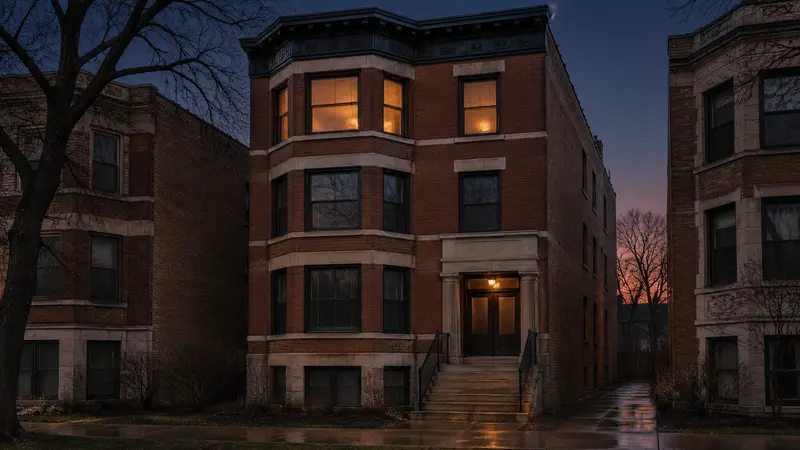
Structural porch repair and most masonry beyond small patches need a permit and licensed trades in Chicago. Porches must carry 100 pounds per square foot, and the permit-free limit for masonry replacement is small: Up to 50 square feet, in-kind. In the example below, masonry and porch work with contractor fee takes 44.2% of the rehab holdback.
- Porch live load
- 100 pounds per square foot
- Porch replaced without a permit
- No more than 6 feet above the ground with a landing of 50 square feet or less
- Masonry replaced without a permit
- Up to 50 square feet, in-kind
- Parapet on an Express permit
- Unbraced height up to 5 feet, in kind
- Lintel on an Express permit
- Up to 6 feet (72 inches) long without stamped specifications
- Footing depth
- 42 inches below final grade
- Contractor license
- Required for work done for pay, as an investment, or to sell or lease
Program terms as of November 26, 2026. Rates as of November 25, 2026.
On this page
- Which porch work needs a permit, and what kind?
- What does a porch inspector look at?
- How far does an Express masonry permit go?
- Who is allowed to do the work?
- How do these items become violations?
- How big is the masonry and porch block in a real budget?
- How do masonry and porch lines get paid from draws?
- What should you line up before closing?
On a Chicago brick building the expensive surprises are outside: a wood porch stacked three stories up the rear wall, a parapet leaning over the gangway, rusted steel above the windows. These items are regulated more tightly than interior finishes, and they are the ones a buyer's inspector photographs first.
The sections below sort the work by permit and by license, then put it in a budget. This is general education from a lender. Confirm scope and permit type with the Department of Buildings or a licensed design professional before relying on it.
Which porch work needs a permit, and what kind?
Anything structural, and anything at all once a violation has been written. The Department of Buildings' porch safety guidance and its Express Permit instructions for porches sort the work this way.
| Porch scope | Permit route |
|---|---|
| Painting, power washing | None |
| Deck boards, treads, pickets, with no violation on file | None |
| Whole porch: No more than 6 feet above the ground with a landing of 50 square feet or less | None, in kind |
| Nonstructural repair needed to clear a violation | Express Permit |
| Multi-story porch: In-kind replacement of up to 25% of the structure | Express Permit, no drawings |
| Multi-story porch, larger replacement or full rebuild in place | Express Permit with stamped drawings |
| New porch, different size or location, enclosed porch, or legalizing unpermitted work | Plan-based permit |
The porch safety page states that a permit is always required to repair or replace structural elements such as columns, beams, foundations, stringers or joists. Where the two City pages read differently for your scope, ask before you build. The broader choice among Express and plan-based permit routes follows the same logic.
What does a porch inspector look at?
Every element. The City says inspectors check joists, beams, columns, stairs, hand and guard rails, ledger boards, connections and footings against a check sheet, and that all porch and deck elements must support 100 pounds per square foot.
Footings are the item rehabbers under-budget. Chicago's code sets footing depth at 42 inches below final grade, under its frost protection amendment. A rebuilt porch on shallow piers is not a rebuilt porch. The Express porch instructions add that where an existing porch falls short of the City's minimum requirements for existing buildings, the shortfall must be corrected as part of any permitted repair. Pouring in cold months has its own constraints, covered under winter work.
How far does an Express masonry permit go?
Far enough for most repair, not for reconstruction of a wall. The Express masonry terms set these edges:
- Tuckpointing and brick replacement. Repair is in scope. Rebuilding all wythes of a multi-wythe exterior wall, other than a parapet, needs a plan-based permit.
- Parapets. Unbraced height up to 5 feet, in kind. The City's Express instructions for masonry state the cut-off differently, listing a parapet taller than 48 inches as ineligible, so plan to four feet until the Department confirms your wall.
- Lintels. Up to 6 feet (72 inches) long without stamped specifications.
- Chimneys. In-kind reconstruction is allowed when described in the application.
- Concrete. Repair only. Lowering a basement slab is reconfiguration and needs plans.
Below those sits the no-permit floor from the City's exempt work list: Up to 50 square feet, in-kind, on residential buildings up to four stories. In a landmark district the exemptions may not apply, and facade work gets design review.
Who is allowed to do the work?
Licensed firms, with narrow exceptions that do not fit investors.
- Mason contractor. The City's mason licensing guidance requires a licensed mason contractor, employing a supervising mason, for most masonry work. Repairs that need no permit are exempt. The license covers the firm's own employees, not crews paid as independent contractors, and a Class C license is limited to site-formed concrete.
- General contractor. The general contractor license rule is: Required for work done for pay, as an investment, or to sell or lease. The owner exception covers a primary residence only.
- Architect or structural engineer. Stamped porch drawings and long-lintel specifications come from Illinois-licensed professionals, whose licenses you can confirm with the Illinois Department of Financial and Professional Regulation.
The City notes that it cannot recommend contractors and suggests three bids with Chicago references.
How do these items become violations?
Often through a 311 complaint. The City sends an inspector when a porch is reported, and a building violation notice states what permit, if any, the repair needs. Once a violation exists, even nonstructural porch repair requires a permit.
Fines under the construction codes run $500 to $1,000 per violation, per day, and the notice may route to administrative hearings or to court. A porch or parapet violation on a building you are buying is a negotiating item and a closing item. The lookup and the transfer question are covered under buying with open violations.
How big is the masonry and porch block in a real budget?
Big enough to test before you offer. Build it as its own block so the contingency attaches to the riskiest work.
The exterior envelope block on a brick three-flat with a wood rear porch
Every line amount is an illustrative input supplied by the reader. Replace each with a written bid.
Masonry and porch budget block
| Line | Amount | How it is figured |
|---|---|---|
| Tuckpointing, side and rear walls | $14,500 | |
| Parapet rebuild with new coping | $9,800 | |
| Steel lintels, four openings | $5,200 | |
| Chimney rebuild above the roof line | $3,600 | |
| Rear porch, three stories, rebuilt in place | $38,000 | |
| Stamped porch drawings and permit fees | $3,200 | |
| General contractor fee | $7,430 | 10% of $74,300 |
| Contingency, held in cash | $12,260 | 15% of $81,730 |
| Rehab holdback on this loan | $185,000 | approved rehab budget of $185,000 |
| Share of holdback this block uses | 44.2% | $81,730 / $185,000, contingency excluded |
| Holdback left for everything else | $103,270 | |
| Envelope block with fee and contingency | $93,990 |
Line items sum to the stated result. Checked in code at build.
A block that uses 44.2% of the holdback leaves $103,270 for roof, mechanicals, kitchens and baths, which is the number to test before you offer.
Assumptions
- The loan is sized at up to 90% of purchase price plus 100% of approved rehab, capped at 75% of supported ARV; here that is $480,000, with $185,000 held back for rehab.
- A 15% contingency is used because concealed masonry conditions are found after scaffolding goes up. It is your cash, not loan proceeds.
- Bid amounts are placeholders, not Chicago price data.
To build your own version, the line-item rehab budget builder takes line items, fee and contingency the same way, and the scope of work and budget template gives the block a place in the lender's format. For the rest of the house, see rehab cost by scope.
How do masonry and porch lines get paid from draws?
After the work is in place and inspected. Rehab funds are staged against a rehab holdback, with inspections. That means you or your contractor front scaffolding, steel and lumber before a draw reimburses them from the rehab holdback. Rehab leverage of 100% of the approved budget is not the same as needing no cash.
Three habits keep these lines moving:
- Split the block into inspectable lines: tuckpointing by elevation, parapet, each lintel group, porch footings, porch framing, porch stairs and rails.
- Photograph concealed work, such as flashing behind a parapet and footing depth, before it is covered.
- Collect a lien waiver from the mason and the porch carpenter with each payment, and log it in the draw tracking log.
The inspection sequence itself is described under how a draw inspection runs, and JFG explains its side in the draw process guide.
Where exterior scope sinks a flip
A cosmetic budget on a building with a failing porch and open parapet does not work. The porch cannot be patched into compliance without a permit once it is cited, the appraiser and the buyer's inspector will both see it, and the cash to front the work was never in the plan. The better route is to price the envelope block first, get stamped porch drawings during attorney review, and walk away or reprice when the block takes too much of the holdback. A three-flat with a rear porch deserves a porch bid before any kitchen bid.
What should you line up before closing?
- Search the address for open porch or masonry violations.
- Walk the exterior with a mason contractor and count lintels over six feet.
- Have an architect or engineer look at the porch and tell you whether it is a repair or a rebuild.
- Get written bids for each line in the block and add contingency.
- Measure the block against the holdback, then decide on the offer.
JFG's Chicago fix and flip loan page describes the program, and the other City rules that shape exterior scope are collected on the Chicago rules hub.
Questions: Masonry, porches and parapets
Can I use the Express Permit Program to replace a rotted three-story porch?
Only for a rebuild in the same size, location and configuration, and with stamped drawings. The City's Express category covers repairs to existing porches. On a multi-story porch, in-kind replacement of up to a quarter of the structure can go without drawings; more than that requires drawings by an Illinois-licensed architect or structural engineer. Building a porch where none existed, changing its size or legalizing one built without a permit needs a plan-based permit.
Is tuckpointing exempt from a building permit?
The City's exemption list does not name tuckpointing. It exempts removing and replacing up to 50 square feet of brick, stone or concrete masonry in kind on residential buildings up to four stories, and it treats Masonry Work as an Express Permit worktype for larger repair. A full-wall grind and point is a job to run past the Department of Buildings or your expediter before the scaffold goes up. A licensed mason contractor is required for masonry repairs that need a permit.
Do I need an engineer for a steel lintel?
For longer spans, yes. The Express masonry terms bar replacing a lintel over six feet unless specifications from an Illinois-licensed architect or structural engineer are filed with the application. Shorter lintels can be replaced under the same permit by a licensed mason contractor. Count your wide openings before bidding, since a storefront or a three-window bay can exceed six feet and move a simple line item into a design fee.
Can my carpenter pour the porch footings?
Possibly. The City's mason licensing guidance exempts installing or repairing foundations for fences, decks, open porches and similar structures from the mason contractor license. The footings still have to reach frost depth, and the porch itself is permitted work supervised by a licensed general contractor on an investment property. Ask the general contractor who is pouring and get it written into the subcontract list.
What does a parapet have to do with my roof bid?
On a flat roof the roofing typically turns up the parapet, so a failing parapet puts a new roof at risk. If the wall has to be rebuilt, do it before or with the roof and coordinate the two trades in one schedule. Under the Express masonry terms a parapet can be rebuilt in kind when its unbraced height is five feet or less. Taller parapets need a plan-based application, which adds design time to the roof start date.
Local rates and rules cited on this page
| Item | Figure | Primary source | Effective |
|---|---|---|---|
| Porch replacement without a permit | No more than 6 feet above the ground with a landing of 50 square feet or less | What Types of Work Do Not Require a Building Permit? (City of Chicago Department of Buildings) | 2026 |
| Multi-story porch repair without stamped drawings | In-kind replacement of up to 25% of the structure | Porch, Deck, Balcony, or Fire Escape Repair (City of Chicago Department of Buildings) | 2024-09-16 |
| Porch and deck live load | 100 pounds per square foot | Porch and Deck Safety (City of Chicago Department of Buildings) | 2026 |
| Footing depth for frost protection | 42 inches below final grade | Municipal Code of Chicago 14B-18-1809 Shallow foundations (American Legal Publishing (Municipal Code of Chicago)) | 2020-08-01 |
| Parapet rebuild on an Express masonry permit | Unbraced height up to 5 feet, in kind | Masonry Work: Express Permit terms and conditions (City of Chicago Department of Buildings) | 2023-11-06 |
| Lintel replacement on an Express masonry permit | Up to 6 feet (72 inches) long without stamped specifications | Masonry Work: Express Permit terms and conditions (City of Chicago Department of Buildings) | 2023-11-06 |
| Masonry replacement without a permit | Up to 50 square feet, in-kind | What Types of Work Do Not Require a Building Permit? (Full List) (City of Chicago Department of Buildings) | 2026 |
| General contractor license trigger | Required for work done for pay, as an investment, or to sell or lease | General Contractor License (City of Chicago Department of Buildings) | 2026 |
| Fine for a general Construction Codes violation | $500 to $1,000 per violation, per day | Municipal Code of Chicago 14A-12-1203.1 Fees, fines, and penalties (American Legal Publishing (Municipal Code of Chicago)) | 2022-12-14 |
Rates as of November 25, 2026. Confirm with the agency before relying on any figure.
Sources
- Porch and Deck Safety, City of Chicago Department of Buildings, 2026.
- Porch, Deck, Balcony, or Fire Escape Repair (Express Permit Program), City of Chicago Department of Buildings, 2024-09-16.
- Masonry Work: Express Permit terms and conditions, City of Chicago Department of Buildings, 2023-11-06.
- Does my project require a licensed mason contractor?, City of Chicago Department of Buildings, 2026.
- Masonry Work (Express Permit Program instructions), City of Chicago Department of Buildings, 2026.
- Mason Contractor License, City of Chicago Department of Buildings, 2026.
- What Types of Work Do Not Require a Building Permit?, City of Chicago Department of Buildings, 2026.
- General Contractor License, City of Chicago Department of Buildings, 2026.
- Municipal Code of Chicago: frost protection of footings, American Legal Publishing (Municipal Code of Chicago), 2020-08-01.
- Illinois Department of Financial and Professional Regulation, State of Illinois, 2026.