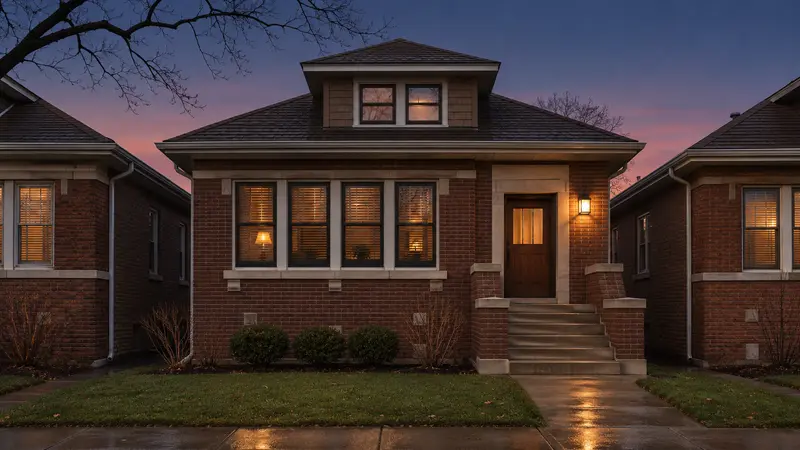
A draw pays you back for rehab work already in place, after an inspection confirms it. On our sample $96,000 budget split into five phases, the largest phase is $30,000, so plan to float that much plus a cash contingency. Draw fees are underwritten file by file, ask your loan officer.
- How rehab funds are released
- staged against a rehab holdback, with inspections
- Rehab leverage
- 100% of approved rehab, inside the ARV cap
- Draw fees
- underwritten file by file, ask your loan officer
- Contractor's sworn statement
- Required before the owner pays the contractor
- Subcontractor lien notice
- Within 90 days after completing work
- City inspection lead time
- At least 4 business days
- Largest phase in the sample
- $30,000 of $96,000
Program terms as of November 26, 2026. Rates as of November 25, 2026.
On this page
- Why is the rehab money held back instead of wired at closing?
- What does the inspector check on a draw visit?
- Which documents go in with a Chicago draw request?
- How do you split a scope so draws follow the work?
- How much cash do you float between draws?
- What stalls a draw on a Chicago job?
- Do change orders come out of the holdback?
- What do draws cost?
- What should be in place before the first request?
The loan commitment says the rehab is funded. Your checking account says otherwise for most of the job. That gap is the draw process.
Jaken Finance Group has a separate guide to the draw process that covers lender mechanics. This page covers what the borrower controls in Chicago: the Illinois lien paperwork, the City permit issues that hold up a release, and the cash that has to sit in the middle.
Why is the rehab money held back instead of wired at closing?
The rehab portion of a flip loan sits in a rehab holdback because the lender's collateral is the finished building, not the budget. JFG's published structure is rehab funds staged against a rehab holdback, with inspections.
The consequence for you is sequence. You or your contractor pay for a phase, the work goes in, an inspector confirms it, and the lender reimburses. Leverage of up to 90% of purchase price plus 100% of approved rehab, capped at 75% of supported ARV describes what the loan covers by the end. It says nothing about who pays in week two, so 100% of rehab financed still means cash on hand, which we quantify on the cash to close page.
What does the inspector check on a draw visit?
A draw inspection compares the work in place to the approved scope of work, line by line. The question is whether the items on the request exist, in the quantity claimed, in this building.
That makes the scope document the measuring stick. A line that reads "kitchen, complete" can only be zero or 100 percent done. A line broken into cabinets, counters, plumbing trim and appliances can be paid in pieces. Write the budget the way you want to be paid, using a format like our scope and budget template.
Which documents go in with a Chicago draw request?
Expect to send a request listing the lines completed, dated photos, invoices or receipts, and lien waivers from the people you paid. Your lender's list controls. The Illinois Mechanics Lien Act is why the waivers matter to you even if no lender asked.
| Document | What it protects | Illinois rule behind it |
|---|---|---|
| Contractor's sworn statement | Tells you every subcontractor and supplier and what each is owed | Required before the owner pays the contractor (770 ILCS 60/5) |
| Partial lien waivers | Proof each party was paid through this draw | Subcontractors keep lien rights by giving notice Within 90 days after completing work (770 ILCS 60/24) |
| Final waivers at the last draw | Clean title for your resale buyer | Liens can be recorded against buyers and lenders up to 4 months after completion |
| Permit certificate and inspection sign-offs | Shows the work was legal to perform | Displayed on site under Municipal Code 14A-4-401.5 |
Once a subcontractor has served notice of its claim, Section 27 of the Act requires the owner to hold back enough to pay it. An agreement to waive lien rights in exchange for being awarded the job is Against public policy and unenforceable under Section 1(d). This is general education; have your attorney review your contractor agreement.
How do you split a scope so draws follow the work?
Break the job where the trades change and where the City inspects, because those are the points at which work is visibly complete.
- Group the budget into four to six phases that each end in something an inspector can see: framing exposed, rough trades in, walls closed, finishes installed.
- Put the City's rough inspections inside a phase, not across two.
- Keep any single phase small enough to pay from cash on hand.
- Assign every budget line to exactly one phase.
- Agree with the contractor, in writing, that payment for each phase follows the draw and the waivers.
The draw schedule planner lets you test different splits against your holdback before you sign the construction contract.
How much cash do you float between draws?
You float the largest phase plus whatever the holdback will never cover. The example splits a bungalow gut into five draws and adds up the cash that has to stay available.
Five draws on a $96,000 Chatham bungalow gut
Purchase $205,000, supported ARV $395,000, loan $280,500 with a $96,000 rehab holdback. Phase amounts are illustrative.
The scope split into five draws
| Line | Amount | How it is figured |
|---|---|---|
| 1. Demolition, framing repairs, roof | $14,000 | request when framing is ready for rough trades |
| 2. Rough plumbing, electrical, HVAC | $24,000 | request after the City's rough inspections |
| 3. Insulation and drywall | $16,000 | $42,000 of holdback left after this draw |
| 4. Kitchens, baths, flooring, trim | $30,000 | the largest phase, and the largest float |
| 5. Exterior, punch list, final inspections | $12,000 | released when the work is complete |
| Approved rehab, all drawn | $96,000 |
Line items sum to the stated result. Checked in code at build.
Cash to keep free while the work runs
| Line | Amount | How it is figured |
|---|---|---|
| Largest phase, paid before it is reimbursed | $30,000 | phase 4, out of pocket until the draw funds |
| Contingency held in cash | $9,600 | 10% of $96,000; overruns are not in the holdback |
| Days from request to wire in this plan | 5 | a planning input, not a lender commitment |
| Rehab the holdback does not cover | $0 | zero here because the cost limit, not the ARV cap, sized the loan |
| Working cash for the rehab | $39,600 |
Line items sum to the stated result. Checked in code at build.
The loan funds all $96,000 of rehab, yet you still need about $39,600 of your own cash moving through the job, 41.3% of the budget.
Assumptions
- Loan sized at up to 90% of purchase price plus 100% of approved rehab, capped at 75% of supported ARV. A lower ARV would shrink the holdback and every draw with it.
- The float assumes you pay each phase in full before requesting its draw.
- Draw fees are left out because they are underwritten file by file, ask your loan officer.
Splitting phase 4 into kitchen and baths first, flooring and trim second, lowers the peak while the total stays the same. Track each request, inspection date and wire in a draw request log so you can see the real turnaround on your own loan.
What stalls a draw on a Chicago job?
Most stalled draws in Chicago come from permit problems, not lender problems. The Department of Buildings requires the permit certificate on site, and its revision permit guidance says approved drawings must be kept there for contractors and inspectors.
- Work beyond the permit. A revision permit is required when: Design or scope changes after the permit is issued and before inspections are complete.
- A stop work order. Work without a permit or outside its scope carries a code penalty of 200% of the regular permit fee under the Municipal Code.
- City inspections not booked. The Department asks for At least 4 business days when you request a specific date.
- Missing waivers or a sworn statement that does not match the invoices.
- Photos that do not show the claimed lines.
Permit programs and their wait times are covered in our guide to Chicago permit paths.
Do change orders come out of the holdback?
Not automatically. The holdback is sized to the approved budget, so a change order is either a reallocation between existing lines, which needs the lender's approval before the work is done, or new cost, which is yours in cash. Carry a contingency outside the loan, and compare bids line by line before closing with the contractor bid comparison sheet.
What do draws cost?
Two costs attach to draws: fees and time. Draw fees are underwritten file by file, ask your loan officer, so get the per-draw and inspection charges in writing with your terms. Ask in the same request whether a share of each draw is retained until the final inspection; the published program terms do not say. Time is the larger number. Every day a finished phase waits for money is a day of carry, so put draw timing on the project calendar, and read what happens when a loan runs long.
When the draw model will not carry the job
Draws fail the borrower who has no working cash after closing. If your contractor needs a large deposit to start and you cannot pay the first phase yourself, the holdback does not help, because nothing is in place to reimburse.
The better route is to fix the cash plan before closing. Shrink the first phase, find a contractor who will carry a phase against prompt draws, or arrange separate funds. Gap or second-lien funding needs separate approval and first-lender consent, and we compare the trade-offs on the gap funding comparison page.
What should be in place before the first request?
Before demolition starts, have five things in hand: the approved budget split into phases, a signed contractor agreement tying payment to draws and waivers, the permit certificate posted, a blank sworn statement form with your contractor, and enough cash for the largest phase plus contingency.
Then return to the process hub for the stages on either side of the rehab, or send the scope and budget to JFG with a Chicago flip loan request to get terms that include the draw fees.
Questions: Draws and draw inspections
Can the first draw cover materials before any work starts?
A rehab holdback reimburses work in place, so plan to buy the first round of materials and pay the demolition crew yourself. Whether a lender will advance anything against delivered or stored materials is a term to ask about before closing. Cabinets and windows are the usual pinch, because the supplier wants a deposit before an inspector can see them installed.
Who should the draw be wired to, me or the contractor?
Ask your loan officer how funds are released, because practice varies by lender. Whoever receives the wire, the Illinois Mechanics Lien Act puts the duty on the owner to require a sworn statement from the contractor before paying, listing every subcontractor and supplier and what each is owed. Collect waivers down the chain with every payment.
What is the difference between a partial and a final lien waiver?
A partial waiver releases lien rights for the amount paid through a stated date, and a final waiver releases them for the whole job. Collect partial waivers with each progress payment, and final waivers from the general contractor and everyone on the sworn statement before the last draw. Have your attorney confirm the forms your contractor uses.
Does a lender's draw inspection replace the City inspection?
No. The lender's inspector confirms that the work on the draw request is in place and matches the approved scope. The Department of Buildings inspector decides whether permitted work meets the Chicago Construction Codes. A City approval does not release money, and a funded draw is not a City approval. Do not close walls before the City's rough inspections.
Is interest charged on rehab money I have not drawn yet?
That depends on the loan documents. Some loans charge interest on the full commitment from day one and some charge only on funds advanced, so ask which basis applies and read it in the note. Jaken Finance Group publishes a rate range of 8.99%-13.5%, interest-only; the basis for your loan is part of the terms your loan officer quotes.
Local rates and rules cited on this page
| Item | Figure | Primary source | Effective |
|---|---|---|---|
| Contractor's sworn statement before payment | Required before the owner pays the contractor | Mechanics Lien Act, 770 ILCS 60/5 (Illinois General Assembly (ilga.gov)) | 2025-01-01 |
| Subcontractor notice of lien claim | Within 90 days after completing work | 770 ILCS 60/24 - Written notice by subcontractor (Illinois General Assembly (ilga.gov)) | 2025-01-01 |
| Lien recording deadline against buyers and lenders | 4 months after completion | 770 ILCS 60/7(a) - Claim for lien (Illinois General Assembly (ilga.gov)) | 2010-01-01 |
| Permit certificate at the job site | Displayed on site under Municipal Code 14A-4-401.5 | Revision Permits (City of Chicago Department of Buildings) | 2026 |
| Agreement to waive lien rights as a condition of getting the job | Against public policy and unenforceable | Mechanics Lien Act, 770 ILCS 60/1(d) (Illinois General Assembly (ilga.gov)) | 2006-01-01 |
| When a Chicago revision permit is needed | Design or scope changes after the permit is issued and before inspections are complete | Revision Permits (City of Chicago Department of Buildings) | 2026 |
| Stop work order penalty for unpermitted work (code) | 200% of the regular permit fee | Municipal Code of Chicago 14A-12-1204.4 Stop work order (American Legal Publishing (Municipal Code of Chicago)) | 2022-12-14 |
| Permit inspection request lead time | At least 4 business days | Permit Inspections (City of Chicago Department of Buildings) | 2026 |
Rates as of November 25, 2026. Confirm with the agency before relying on any figure.
Sources
- Mechanics Lien Act, 770 ILCS 60/5, contractor's sworn statement, Illinois General Assembly, 2025-01-01.
- Mechanics Lien Act, 770 ILCS 60/24, subcontractor notice, Illinois General Assembly, 2025-01-01.
- Mechanics Lien Act, 770 ILCS 60/27, owner's duty after notice, Illinois General Assembly, 1999-07-29.
- Mechanics Lien Act, 770 ILCS 60/1, waiver agreements, Illinois General Assembly, 2006-01-01.
- Revision Permits, City of Chicago Department of Buildings, 2026.
- Permit-Related Building Inspections, City of Chicago Department of Buildings, 2026.
- Municipal Code of Chicago, stop work order penalties, City of Chicago (American Legal Publishing), 2026.