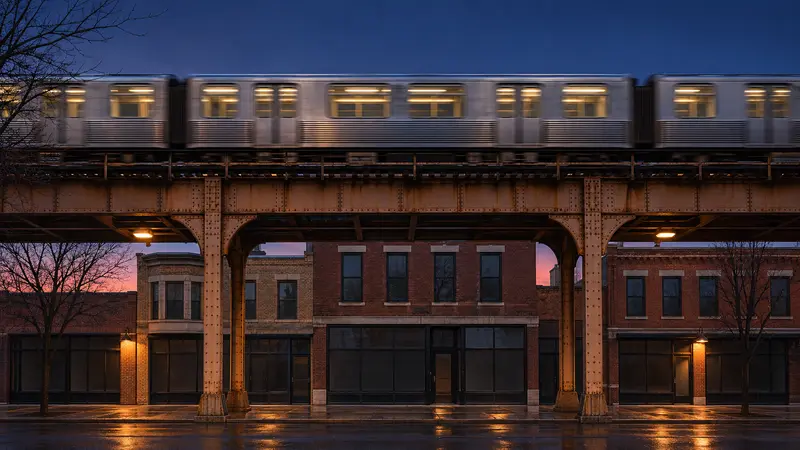
Austin gives flippers two deep sale samples and a heavy diligence load. The Assessor recorded 658 single-family sales at a $270,000 median and 521 two-to-six-unit sales at $345,000. Violations were written at 732 addresses, renovation permits took a median 67 days, and a median-to-median house flip loses $30,481.
- Renovation permits issued, 24 months
- 287
- Median application to issuance
- 67 days in Austin, 56 citywide
- Addresses with violations written
- 732
- Vacant-building complaints to 311
- 582
- Single-family sales and median
- 658 sales, $270,000
- Two-to-six-unit sales and median
- 521 sales, $345,000
- Median-to-median house flip
- -$30,481 before income tax
Program terms as of November 26, 2026. Rates as of November 25, 2026.
On this page
- How many Austin addresses carry code violations, and for what?
- What do Austin's vacant-building complaints mean for a buyer?
- Houses or two-flats: which Austin sale sample is deeper?
- Does a flip at Austin's house medians clear the ARV cap?
- How long do Austin renovation permits take, and by which path?
- What is Austin's housing stock, and how is it zoned?
- Where do landmark and Demolition-Delay rules reach in Austin?
- Can you add a unit to an Austin house under the ADU rules?
- What should you check on an Austin address before you offer?
- What is the next step on an Austin deal?
Austin is community area 25, on the western edge of Chicago, and the City's boundary file measures it at 7.15 square miles.
Austin has enough recorded sales of both houses and small multi-unit buildings to price either one, and it logged more violation line items and more vacant-building complaints than any area it touches in the neighborhood data set: Humboldt Park had 1,774 violations and North Lawndale 2,474.
Sources: City of Chicago Data Portal (Building Permits ydr8-5enu, Building Violations 22u3-xenr, 311 Service Requests v6vf-nfxy), 2024-11-01 to 2026-10-31; Cook County Assessor Parcel Sales (wvhk-k5uv), 2024-05-01 to 2026-04-30.
How many Austin addresses carry code violations, and for what?
Inspectors wrote 4,212 violation line items at 732 Austin addresses in 24 months. That is 589 per square mile, 1.42 times the citywide density, and one inspection can add many line items.
Austin has 322 elevator-bureau items, the most common kind citywide. The table leaves them out so you see what small-building owners are cited for: exterior walls (179 citations) and chimneys (108), both masonry.
| Most cited violation (elevator bureau excluded) | Citations, 24 months |
|---|---|
| Repair Exterior Wall (CN061014) | 179 |
| Arrange For Reinspection Regar (CN190029) | 158 |
| Arrange Premise Inspection (CN190019) | 115 |
| Chimney (CN063014) | 108 |
| Owner Or Licensed Contractor (BR1001) | 103 |
| All violations, 732 addresses | 4,212 |
Source: City of Chicago, Department of Buildings, Building Violations (dataset 22u3-xenr), 2024-11-01 to 2026-10-31; retrieved 2026-11-26. Source: City of Chicago, Boundaries - Community Areas (dataset igwz-8jzy); retrieved 2026-11-26.
Most rows show as open, in Austin and citywide, so that status alone tells you little. Run the address through the Department of Buildings violation records search and read how open violations transfer before pricing an Austin building.
What do Austin's vacant-building complaints mean for a buyer?
Residents filed 582 vacant or abandoned building complaints with 311 for Austin addresses, 81 per square mile against 46 citywide. Complaints are not confirmed vacancies, and 26 Austin filings were flagged as duplicates.
Within 30 days of becoming vacant, an Austin building must be registered with the City and insured for $300,000 per occurrence, and that duty passes to the buyer under the vacant registration rules.
CMAP's Austin snapshot counts 222.3 acres of vacant land in Austin in its 2023 land use inventory, and the City's land inventory listed 357 Austin parcels in City ownership in November 2026.
Houses or two-flats: which Austin sale sample is deeper?
Both are deep. The Assessor recorded 658 single-family sales in Austin between May 2024 and April 2026 and 521 sales of two-to-six-unit buildings, with non-market deed types filtered out. Austin houses sold at a $270,000 median; the city figure is $307,100.
| Property class | Sales | 25th pct. | Median | 75th pct. | Citywide median |
|---|---|---|---|---|---|
| Single-family (class 2-02 to 2-10, 2-34, 2-78) | 658 | $166,750 | $270,000 | $367,500 | $307,100 |
| Two to six units (class 2-11, 2-12) | 521 | $225,000 | $345,000 | $440,000 | $443,000 |
| Condominium (class 2-99) | 56 | $124,975 | $162,000 | $186,250 | $325,000 |
Source: Cook County Assessor's Office, Assessor - Parcel Sales (dataset wvhk-k5uv), 2024-05-01 to 2026-04-30; retrieved 2026-11-26. Source: Cook County Assessor's Office, Assessor - Parcel Universe (Current) (dataset pabr-t5kh); retrieved 2026-11-26.
The middle half of Austin house sales runs from $166,750 to $367,500, and the middle half of small multi-unit sales from $225,000 to $440,000. The two-flat flip guide covers valuing an Austin two-flat, and Jaken Finance Group keeps a page on lending in Austin.
Does a flip at Austin's house medians clear the ARV cap?
No. The example uses the single-family class because it is the deeper Austin sample, buys at the 25th percentile as a proxy for a discounted purchase, and resells at the median. The loan is sized at up to 90% of purchase price plus 100% of approved rehab, capped at 75% of supported ARV, and in Austin the ARV cap is the lower limit by $27,575, which you cover as down payment.
An Austin house bought at $166,750 and resold at the $270,000 median
Prices are Austin medians and quartiles from the public files. Rate, points and carry are illustrative inputs, not an offer.
Sizing the loan: cost limit against the ARV cap
| Line | Amount | How it is figured |
|---|---|---|
| Advance toward the purchase at closing | $122,500 | loan less the rehab holdback |
| Rehab holdback, released by draw | $80,000 | Austin median reported permit cost |
| Cost-based limit | $230,075 | 90% of $166,750 plus 100% of $80,000 |
| ARV cap | $202,500 | 75% of $270,000; lower, so it governs |
| Loan amount | $202,500 |
Line items sum to the stated result. Checked in code at build.
Result at the Austin medians
| Line | Amount | How it is figured |
|---|---|---|
| Resale at the single-family median | $270,000 | 658 recorded sales |
| Purchase, buyer closing costs and transfer tax | -$170,503 | $166,750 25th percentile price |
| Rehab plus 10% contingency | -$88,000 | $80,000 plus $8,000 |
| Points, lender fees and interest | -$18,977 | 2 points; 7.23 months at 11% |
| Taxes, insurance and utilities | -$5,787 | illustrative carry |
| Commission, seller transfer taxes, closing | -$17,215 | 5% commission |
| Profit before income tax | -$30,481 |
Line items sum to the stated result. Checked in code at build.
The $30,481 loss is a finding about median-to-median math in Austin, not a forecast for any house. With the same costs, a purchase near $136,000 breaks even.
Assumptions
- The 11% rate and 2 points sit inside the published 8.99%-13.5% and 1-3 points; they are inputs, not a quote.
- Hold is 5 months of rehab and sale plus Austin's 67-day median permit wait: 7.23 months.
- Reported permit cost covers permitted work only, so $80,000 understates a full Austin rehab.
The result is negative because the distance from Austin's 25th percentile to its median, $103,250, is smaller than rehab, carry and selling costs combined. An Austin flip works when you buy below the quartile or comps support a resale above the median. The loan-to-cost and ARV-cap page and the what-to-bid calculator run Austin numbers both ways.
How long do Austin renovation permits take, and by which path?
The Department of Buildings issued 287 renovation and alteration permits in Austin in 24 months, with a median of 67 days from application to issuance against 56 citywide. The Austin count covers the Renovation/Alteration type in the City's permit file; Express Permit Program repairs are excluded.
| Review path | Permits | Median days | Middle half | Citywide median |
|---|---|---|---|---|
| Standard Plan Review | 181 | 97 | 36 to 171 | 94 |
| Self Cert | 104 | 43.5 | 26 to 76 | 27 |
| Direct Developer Services | 2 | 287 | 287 to 287 | 87.5 |
| All renovation/alteration permits | 287 | 67 | 34 to 143 | 56 |
Source: City of Chicago, Department of Buildings, Building Permits (dataset ydr8-5enu), 2024-11-01 to 2026-10-31; retrieved 2026-11-26.
Standard Plan Review handled 181 Austin permits at a 97-day median. Self-Certification handled 104 at 43.5 days, slower than the 27-day citywide self-cert median.
What is Austin's housing stock, and how is it zoned?
Austin has 38,718 housing units in the 2020-2024 American Community Survey. Detached houses are 26.4% of units, and buildings with two to four units hold 46.8%.
| Housing stock | Austin |
|---|---|
| Housing units | 38,718 |
| Single-family detached share | 26.4% |
| Units in 2 to 4 unit buildings | 46.8% |
| Built before 1940 | 49.5% |
| Owner-occupied share of occupied units | 42.8% |
Source: U.S. Census Bureau, American Community Survey 2020-2024 5-Year Estimates, Detailed Tables (table-based summary file) (dataset ACSDT5Y2024), 2020-01-01 to 2024-12-31; retrieved 2026-11-26. Source: City of Chicago, Boundaries - Census Tracts - 2020 (dataset 7qjk-677h); retrieved 2026-11-26.
CMAP puts Austin's median year built at 1941, against 1953 for Chicago, so federal lead-safe renovation rules for older housing reach most Austin rehabs. In the City's zoning district file, RS-3 is the largest district by area among those touching Austin, followed by a planned manufacturing district and RT-4.
Where do landmark and Demolition-Delay rules reach in Austin?
The City lists 15 individual landmarks in Austin, several of them houses on Midway Park and Race Avenue, and permits on those get landmark review. The wider net is the Chicago Historic Resources Survey. The City's survey file rates 159 standing Austin buildings orange and 4 red, and the Demolition-Delay Ordinance lets the City hold a demolition permit on any of them (hold: Up to 90 days). See the landmark and demolition-delay page before planning an Austin teardown.
Can you add a unit to an Austin house under the ADU rules?
It depends on which side of Austin the lot is on. The City's ADU eligibility map shows an ADU-Allowed RS Area with no added limitations across roughly half of Austin, mostly its western side and northern arm, while RS lots in eastern Austin are outside any allowed area. RT-4 and other multi-unit lots in Austin qualify by right under the ADU ordinance.
What should you check on an Austin address before you offer?
- Search the Austin address in Department of Buildings records for violations and court cases.
- Check whether the building is orange or red in the survey file, or one of Austin's 15 landmarks.
- Confirm the zoning district and whether the lot is inside Austin's ADU-Allowed RS Area.
- Finish the address-level diligence checklist before earnest money goes hard.
When the Austin medians will not carry a flip
A purchase at Austin's 25th percentile, a permitted rehab and a resale at the median loses money in the example, and financing does not fix that. Even with the rehab funded, an Austin deal leaves closing costs, interest, overruns and work done ahead of draws to pay in cash. If the building also has an open court case, price the cure first, or pass and compare Humboldt Park's numbers to the east or North Lawndale's two-flat data to the southeast.
What is the next step on an Austin deal?
Test your Austin resale number against the $367,500 and $440,000 upper quartiles, because a number above those needs strong comps. JFG's 2026 neighborhood guide gives the citywide view. Zoning and landmark points are general education as of November 2026; confirm them for your Austin address with local counsel.
Questions: Austin flip data
Do Austin's Green Line stations change the parking a rehab has to provide?
They can. CTA's station list places the Austin, Central, Laramie and Cicero stops of the Green Line inside Austin, plus the Cicero stop on the Blue Line. The zoning ordinance lets parking minimums be reduced for rehab close to a CTA rail station (reduction: Up to 100%), which matters when you add a unit on a tight Austin lot. Confirm the distance with a zoning attorney.
Which wards cover Austin when a project needs a zoning change?
Building permits issued in Austin over the 24-month window carry four ward numbers in volume: the 29th, the 37th, the 28th and the 24th, in that order. A rezoning goes to the City Council Committee on Zoning, and the application fee alone is $1,025 non-refundable. The 29th and 37th split most of Austin.
How many City-owned lots sit in Austin, and can an investor buy one?
The City-Owned Land Inventory listed 357 Austin parcels as owned by the City in November 2026, and another 334 as already sold. The City sells vacant lots through its ChiBlockBuilder portal in application rounds, for uses such as housing, side yards and open space. For a flipper the inventory mostly shows where new construction may appear next to an Austin rehab.
Did Austin single-family prices move during the sale window?
Only slightly. The Austin single-family median was $265,000 on 247 sales in the 2024 months of the window, $270,000 on 326 sales in 2025 and $280,000 on 85 sales in the first four months of 2026. These are unadjusted medians, so a change in which Austin houses sold can move them without any change in values.
Why is Austin's median reported permit cost below the citywide figure?
Austin renovation permits reported a median cost of $80,000, against $105,000 across Chicago. The field is the applicant's estimate of permitted work, so it leaves out finishes and cabinets and mixes small jobs with full rehabs. A lower Austin median means smaller typical permitted scopes. It does not mean a gut rehab of an Austin two-flat costs less.
Local rates and rules cited on this page
| Item | Figure | Primary source | Effective |
|---|---|---|---|
| Vacant building registration deadline | Within 30 days | Requirements for Vacant Building Owners (Revised 1/2026) (City of Chicago Department of Buildings) | 2026-01 |
| Vacant building liability insurance, residential | $300,000 per occurrence | Requirements for Vacant Building Owners (Revised 1/2026) (City of Chicago Department of Buildings) | 2026-01 |
| Demolition-Delay hold | Up to 90 days | Demolition Delay (City of Chicago Department of Planning and Development) | 2003 |
| Parking reduction near CTA rail or listed bus corridors | Up to 100% | Chicago Zoning Ordinance 17-10-0100 General (Transit-Served Locations) (American Legal Publishing (Chicago Zoning Ordinance)) | 2026-09-29 |
| Zoning map amendment application fee | $1,025 non-refundable | Zoning Amendments (City of Chicago Department of Planning and Development) | 2026 |
| Chicago transfer tax, City portion (buyer) | $3.75 per $500 of price | Real Property Transfer Tax (7551) (City of Chicago Department of Finance) | 2008-04-01 |
| Chicago transfer tax, CTA portion (seller) | $1.50 per $500 of price | Real Property Transfer Tax (7551) (City of Chicago Department of Finance) | 2008-04-01 |
| Cook County real estate transfer tax | $0.25 per $500 of value | Transfer Fees (Cook County Clerk) | 1968-01-01 |
| Illinois state real estate transfer tax | $0.50 per $500 of value | 35 ILCS 200/31-10, Imposition of tax (Illinois General Assembly) | 2005-06-01 |
Rates as of November 25, 2026. Confirm with the agency before relying on any figure.
Sources
- Building Permits, City of Chicago Department of Buildings, 2026-11-25.
- Building Violations, City of Chicago Department of Buildings, 2026-11-25.
- Assessor - Parcel Sales, Cook County Assessor's Office, 2026-11-15.
- Austin Community Data Snapshot, Chicago Metropolitan Agency for Planning, June 2026.
- Chicago Historic Resources Survey - Red and Orange Buildings, City of Chicago, 2026-08-21.
- ADU Eligibility, City of Chicago Department of Housing, 2026.
- City-Owned Land Inventory, City of Chicago Department of Planning and Development, 2026-11-26.
- Demolition-Delay Ordinance, City of Chicago Department of Planning and Development, 2026.
- Building Violations Online, City of Chicago Department of Buildings, 2026.