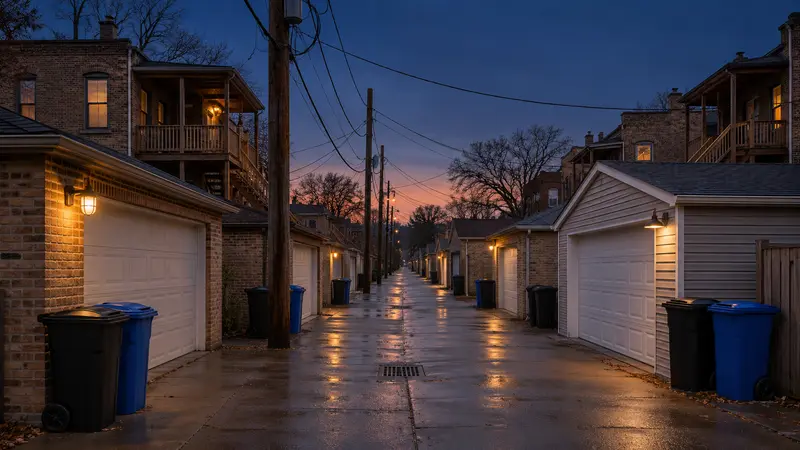
Check the building record, the legal unit count, the tax status, the water account and the title before your contingency runs out. In Chicago those records sit with five different offices: the Department of Buildings, Planning and Development, the Cook County Treasurer and Clerk, and the Department of Finance. The checklist names each lookup and why it matters.
Chicago Flip Due Diligence Checklist
Pre-offer and pre-closing checks for a Chicago or Cook County flip: what to look up, which office holds the record and what the answer does to your budget or schedule.
On this page
- Which checks come before the offer?
- What does the Department of Buildings record show?
- How do you confirm the legal unit count?
- Where do unpaid taxes and water bills surface?
- What is in the Chicago due diligence checklist?
- Which findings change the loan and not only the budget?
- What do tenants, old paint and condos add?
- How do you turn the findings into a decision?
A generic due diligence list tells you to "check for liens and violations." In Chicago that is at least eight separate lookups across city and county offices that do not share a search box. Miss one and you find out at the closing table, or in month four of the rehab.
This checklist is general education, not legal advice. Have a real estate attorney review title and municipal items on every purchase.
Which checks come before the offer?
Before the offer, run the checks that are free, fast and capable of killing the deal: the building record, the zoning district, landmark status and the tax record. All four are online and none needs the seller's cooperation.
Save the paid and slow items, such as the survey, sewer camera and title commitment, for the attorney review and inspection period. The checklist is grouped in that order.
What does the Department of Buildings record show?
The Department of Buildings' building records search returns permits, inspections, enforcement case activity and alleged code violations for an address. Read it two ways. Open violations are work you inherit, and each one needs a line in your scope. Missing permits are the other signal: a finished basement unit with no permit history is a unit you may not be able to keep.
Enforcement runs on two tracks. Many cases go to the Department of Administrative Hearings. Others are filed in the Housing Section of the Circuit Court of Cook County, which hears municipal code cases on calls that include conservation, demolition and exterior walls. Check both, then read how lenders treat open violations. If the building is empty, the City's vacant building rules apply to you from the day you own it.
How do you confirm the legal unit count?
You confirm it with the Certificate of Zoning Compliance, not the listing. The Department of Planning and Development says the certificate is required when residential property with five or fewer dwelling units is sold, that it certifies the number of units legal under the Zoning Ordinance, and that condominiums and cooperatives are exempt.
The gap between "three kitchens" and "two legal units" is a gap in value, rent and loan size. Ask for the certificate early.
Check the color rating too. The City says its Demolition-Delay Ordinance applies to buildings rated red or orange in the Chicago Historic Resources Survey, and those ratings are shown on the zoning map. Details are in the guide to landmark districts and demolition delay.
Where do unpaid taxes and water bills surface?
Unpaid taxes surface in two county offices, and unpaid water at the City. The Treasurer shows current bills. Prior-year trouble is at the Cook County Clerk, whose delinquent property tax search reports sold, forfeited or open taxes by PIN.
Water follows the property. The Department of Finance says a Full Payment Certificate is required in transfers of real property, that transfer stamps cannot be obtained without one, and that buyer and seller are jointly liable for the balance if a required certificate is skipped. The guide to water certification, title and liens walks through the order of operations.
Then look at exemptions. The Assessor's exemptions page describes the homeowner exemption as one for people who own and occupy the home, which an investor does not. Jaken Finance Group's Cook County property tax guide covers how bills are built; this site covers reassessment after a rehab.
What is in the Chicago due diligence checklist?
Property identification
Every search below runs on the address or the PIN. Get both right before you start.
Before you offer: the building record
| What to check | Where to check it | Why it matters on a flip |
|---|---|---|
| Permit history, inspections and alleged code violations | City of Chicago Department of Buildings, Building Permit and Inspection Records search (by address) | Shows open violations you will inherit and whether past work was permitted. The Department notes that a clean result does not prove the building complies with the code. |
| Administrative building cases | City of Chicago Department of Administrative Hearings, Buildings Hearings Division; the City publishes case records in its Ordinance Violations dataset | Unpaid fines and open orders can become liens and must be resolved or budgeted before closing. |
| Building court cases | Circuit Court of Cook County, First Municipal District, Housing Section; case search through the Clerk of the Circuit Court of Cook County | Dangerous or hazardous conditions are sent to court. A pending case can come with court dates, a compliance schedule and limits on what you do with the building. |
| Vacant building registration | City of Chicago Department of Buildings, Vacant Building Registration (VBR) site | Owners of vacant buildings must register, insure, secure and maintain them. Registration and its fees pass to you if the building is still vacant after closing. |
| Stop-work orders and unpermitted work in progress | Department of Buildings records, plus a site visit | A stop-work order has to be released before your contractor can start, and the release can require a permit for work already done. |
Before you offer: zoning, units and landmark status
| What to check | Where to check it | Why it matters on a flip |
|---|---|---|
| Zoning district and overlays | City of Chicago interactive Zoning Map | The district controls how many units, how much floor area and what additions are allowed. It decides whether your plan is a permit or a zoning change. |
| Legal number of dwelling units | Certificate of Zoning Compliance, issued by the City of Chicago Department of Planning and Development (Zoning Ordinance Administration) | Required when residential property with five or fewer dwelling units is sold, except condominiums and cooperatives. Value and rents rest on the legal count, not on the number of kitchens you see. |
| Chicago Landmark or landmark district status | Commission on Chicago Landmarks; permit review is done by the Historic Preservation Division of the Department of Planning and Development | Permit applications for designated and proposed landmarks and districts are routed for review of the work, which adds a step and can limit exterior changes. |
| Chicago Historic Resources Survey (CHRS) color rating | CHRS ratings appear on the City of Chicago interactive Zoning Map | Buildings rated red or orange are subject to the Demolition-Delay Ordinance, which places a hold on issuing a demolition permit while the City considers preservation. |
| Planned changes that need zoning relief | Zoning Administrator (administrative adjustment) or Zoning Board of Appeals (variation) | A certificate of zoning compliance does not let you expand a nonconforming use. Relief takes time that the loan term has to cover. |
Property taxes and assessment
| What to check | Where to check it | Why it matters on a flip |
|---|---|---|
| Current-year bills, amounts due and payment history | Cook County Treasurer, property tax search by PIN | Unpaid installments are prorated or paid at closing. Bills are paid in arrears, so the seller credit you receive is an estimate. |
| Sold, forfeited or open prior-year taxes | Cook County Clerk, Delinquent Property Tax Search (by PIN) | Sold taxes must be redeemed through the Clerk, with interest and fees, on an Estimate of the Cost of Redemption. A tax buyer can eventually seek a deed. |
| Property class and assessed value | Cook County Assessor's Office, property details by PIN or address | Confirms the class the County taxes the property under and the value history you will be reassessed from. |
| Exemptions on the current bill | Cook County Assessor's Office, exemption history and status | Homeowner and senior exemptions belong to the occupant who qualified. An investor owner does not qualify, so the bill you carry and the bill your buyer sees will be higher than the seller’s. |
Title, water and transfer
| What to check | Where to check it | Why it matters on a flip |
|---|---|---|
| Title commitment: mortgages, judgments, liens, easements, building court lis pendens | Your title company; recorded documents can be searched by PIN at the Cook County Clerk, Recordings Division | Every item on Schedule B has to be paid, released or accepted before the lender funds. |
| Water, sewer and garbage account balance | City of Chicago Department of Finance, Utility Billing and Customer Service; Full Payment Certificate application | A Full Payment Certificate is required in transfers of real property in Chicago, and the City will not issue transfer stamps without it. If it is skipped, buyer and seller are jointly liable for the old balance. |
| Transfer tax declarations | Illinois Department of Revenue MyDec system; City of Chicago Department of Finance Real Property Transfer Tax | State, county and city transfer taxes are declared and paid at closing. In Chicago the city tax has a buyer portion and a seller portion. |
| Survey | Illinois licensed professional land surveyor | Shows encroachments, lot lines and whether the garage, porch or fence is actually on the lot. Title companies and lenders commonly require a current one. |
Occupancy, tenants and lead
| What to check | Where to check it | Why it matters on a flip |
|---|---|---|
| Who is living there and under what agreement | Leases, rent roll and estoppel letters from the seller; a visit to every unit | You inherit leases at closing. An occupied unit changes the rehab sequence, the insurance and the loan. |
| Residential Landlord and Tenant Ordinance (RLTO) coverage | Municipal Code of Chicago, Chapter 5-12; City of Chicago Department of Housing | The RLTO covers most Chicago rentals, with an exception for owner-occupied buildings of six units or fewer. An investor owner is covered, including the rules on security deposits and notices. |
| Lead-based paint (housing built before 1978) | U.S. Environmental Protection Agency: Lead-Based Paint Disclosure Rule and the Renovation, Repair and Painting (RRP) Rule | When you resell, you must disclose known lead information and give the buyer the EPA pamphlet. Firms paid to disturb paint must be certified, and EPA says the RRP Rule applies to people who buy, renovate and sell homes for profit. |
| Water service line material | City of Chicago Department of Water Management | Many older buildings are served by lead service lines. Replacement belongs in the plumbing scope if you are doing it, with its own permit. |
Physical condition, utilities and insurance
- Inspection by a licensed home inspector or your general contractor, including roof, parapets, lintels, porches, foundation and basement water
- Sewer line camera inspection to the street
- Electrical service size and number of meters compared with the unit count
- Gas and electric service status with Peoples Gas and ComEd
A shut-off or removed meter can take weeks to restore and may need an inspection first. - Heat: boiler or furnace age, one system per unit or shared
- Insurance quotes for a vacant building under renovation (builder's risk), bound before closing
Get the quote during attorney review. Some carriers decline vacant masonry buildings with open violations. - General contractor license confirmed on the Department of Buildings list of licensed general contractors
Condominium units
Skip this section for houses and two- to four-flats.
- Resale disclosure documents under Section 22.1 of the Illinois Condominium Property Act (765 ILCS 605/22.1)
The seller obtains them from the Board of Managers: declaration and rules, unpaid assessments and liens, planned capital expenditures, reserve balance, financial statement, pending suits and insurance. - Special assessments approved or under discussion
- Rental restrictions and any rule against sales to investors
- Renovation rules: work hours, elevator reservations, insurance certificates, board approval of plans
- Owner-occupancy ratio and any litigation, which affect what your resale buyer can finance
Sign-off before the contingency deadline
Which findings change the loan and not only the budget?
Four findings change what a lender will do, not merely what you spend:
| Finding | What it changes |
|---|---|
| Legal units fewer than marketed | Value, rents and the loan amount |
| Building court case pending | Title, timeline and conditions to close |
| Taxes sold to a tax buyer | Payoff at closing through the Clerk's redemption process |
| Tenants in place | Insurance, rehab sequence and which loan fits |
Tell your lender about these when you find them. A problem disclosed in week one is a condition. The same problem found by the title company in week three is a delay.
What do tenants, old paint and condos add?
Tenants bring the Residential Landlord and Tenant Ordinance with them. The Department of Housing says the RLTO covers most Chicago rentals except units in owner-occupied buildings of six units or fewer, so an investor-owned two-flat is covered.
For housing built before 1978, EPA's lead disclosure rule requires sellers to share known lead information before a buyer signs. You are the buyer today and the seller when the work is done.
For a condo unit, ask the seller for the association disclosures listed in Section 22.1 of the Illinois Condominium Property Act.
How do you turn the findings into a decision?
Add up two numbers on the sign-off block: dollars added to the budget and days added to the schedule. Then decide: proceed, renegotiate or cancel before the deadline. The rest of the free template collection picks up from there.
Questions: Chicago due diligence checklist
How long does Chicago due diligence take on a two-flat?
The online lookups take an afternoon: building records, the zoning map, the Treasurer, the Clerk and the Assessor all search by address or PIN. The slow items are the ones other people produce. A title commitment, a survey, a sewer scope, insurance quotes and the seller's municipal certificates run on their own clocks, so order them on the day your contract is signed and use the attorney review window for everything you can look up yourself.
Does a clean building records search mean there are no violations?
No. The Department of Buildings says its search returns what its electronic records hold for that address: permits, inspections, enforcement case activity and alleged violations. Conditions nobody has inspected will not appear, and older paper records may be missing. Treat a clean result as the start of the check. Compare the permit history with the work you can see, and have your contractor look for additions, basement units or porches with no permit behind them.
What if the seller's tax bill shows a homeowner exemption?
Budget without it. The Cook County Assessor describes the homeowner and senior exemptions as available to people who own and occupy the property as their principal residence, and an investor entity does not. The bill you carry during the rehab, and the bill your buyer's lender sees, will be higher than the seller's last one. Check the exemption history on the Assessor's property details page before you estimate holding costs or tax prorations.
Can I close on a Chicago property with an open building court case?
Sometimes, but not casually. A pending case in the Housing Section of the Circuit Court of Cook County usually shows on the title commitment, and the title company, your lender and the City's attorneys each have a say in what happens next. A buyer may have to appear in the case and commit to a repair schedule. Get your attorney and your lender involved before the inspection contingency expires, and price the court's timeline into your hold.
Do suburban Cook County properties need the same checks?
The county checks are identical: Treasurer, Clerk, Assessor and recorded documents all work the same way by PIN. The city checks are not. The Full Payment Certificate, the Certificate of Zoning Compliance, the vacant building registry, the RLTO and demolition delay are City of Chicago rules. Each suburb sets its own transfer and inspection requirements, so call the village hall before you rely on a Chicago checklist outside the city.
Sources
- Search Building Department Records, City of Chicago Department of Buildings, 2026.
- Certificate of Zoning Compliance, City of Chicago Department of Planning and Development, 2026.
- Full Payment Certificates, City of Chicago Department of Finance, 2026.
- Delinquent Property Tax Search, Cook County Clerk, 2026.
- Demolition Delay, City of Chicago Department of Planning and Development, 2026.
- Housing Section, First Municipal District, Circuit Court of Cook County, 2026.
- Property Tax Exemptions, Cook County Assessor's Office, 2026.
- Residential Landlord and Tenant Ordinance, City of Chicago Department of Housing, 2026.
- Real Estate Disclosures about Potential Lead Hazards, U.S. Environmental Protection Agency, 2026.