You buy from the court-appointed representative, and the letters of office tell you whether that person can sign alone. An independent executor or administrator needs no court order to sell; a supervised one needs the judge's leave. With letters and clear title in hand, a flip loan can close in 7-10 business days.
- Independent administration
- No court order required
- Supervised administration
- Court approval required
- Small estate affidavit
- $150,000 of personal property, not counting registered motor vehicles
- Creditor claims window
- At least 6 months from first publication
- Cost to open a Cook County estate
- $479
- Seller disclosure report
- Not required from an estate fiduciary
Program terms as of November 26, 2026. Rates as of November 25, 2026.
On this page
- Who has the legal power to sell a dead owner's Chicago house?
- Independent or supervised: which kind of estate is selling?
- Why won't a small estate affidavit convey the house?
- What do heirs and bonds do to title?
- Do creditor claims follow the house to you?
- How long does an estate purchase take to close?
- Is a faster closing worth a lower price to the estate?
- What condition and permit history should you expect?
- How does a lender close with an estate as the seller?
- Which documents should you ask for first?
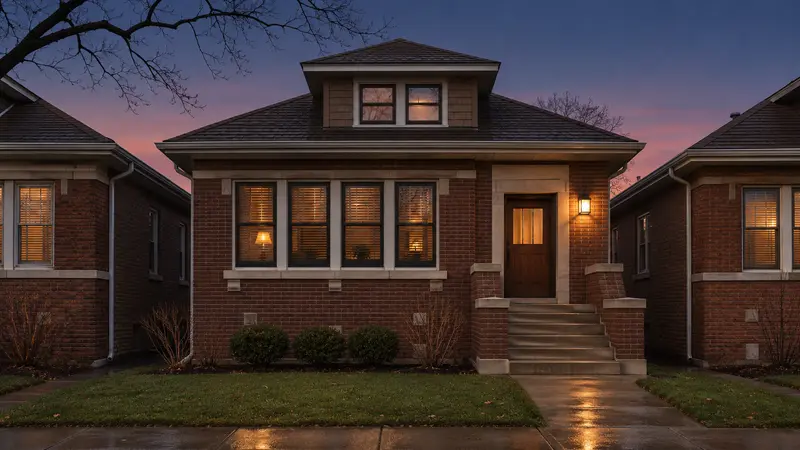
Estate houses are a steady source of Chicago flips: long-held bungalows and two-flats, original kitchens, little debt, and sellers who want the matter finished. The risk is rarely the house. It is signing with someone who cannot convey it.
What follows is general education on the Illinois Probate Act as of November 2026. An estate is a court matter with its own facts, so have a real estate attorney read the letters, the will and the title commitment before your money goes hard.
Who has the legal power to sell a dead owner's Chicago house?
Only the representative appointed by the Circuit Court can sell, and only after letters of office issue. An executor is named in a will; an administrator is appointed when there is none. In Cook County the Probate Division sits in Room 1202 of the Daley Center, and the Clerk issues the letters after the judge enters the order.
A son with the keys, a daughter named in an unfiled will, and an heir holding a death certificate all lack that power. Ask for a certified copy of the letters before you spend on inspections.
Independent or supervised: which kind of estate is selling?
The letters themselves answer this, because an order granting independent administration must name the person as independent executor or independent administrator. The difference decides your closing date.
| Independent administration | Supervised administration | |
|---|---|---|
| Authority to sell real estate | No court order required | Court approval required |
| Statute | 755 ILCS 5/28-8 | 755 ILCS 5/20-4 |
| Who sets the terms | The representative, acting reasonably for the estate | The court, on a petition |
| Closing date risk | Low once title is clear | Depends on the court calendar |
| Watch for | A will that restricts sale; a specifically bequeathed house | A hearing date, and conditions in the order |
Two limits apply even to an independent representative. Real estate left to a named person cannot be sold without that legatee's written consent. And any interested person may petition to end independent status, which moves the estate into supervision.
Why won't a small estate affidavit convey the house?
A small estate affidavit moves personal property only, so it cannot transfer real estate. The statute caps it at $150,000 of personal property, not counting registered motor vehicles. Families use it for bank accounts and assume it covers the house, but it creates no representative with power to sign a deed. If the seller offers an affidavit instead of letters, the estate still has to be opened, at a filing cost of $479 plus legal fees and weeks of lead time.
What do heirs and bonds do to title?
Heirs matter less than buyers fear once a representative is in office, and the bond matters more. Section 20-15 says a buyer from a representative takes the title the decedent held, and the claims of everyone claiming through the decedent shift to the sale proceeds. The same section holds the sale valid even if the will is later set aside.
That section also requires the representative to satisfy the Probate Act's bond rule before selling. Where the will waives surety, the bond increases without a new filing unless the court orders one. Where it does not, expect the title company to ask for proof. Raise it when you review the title commitment. The general lien and water steps are covered under clearing title and water liens.
Do creditor claims follow the house to you?
No, creditor claims attach to the estate and its proceeds, not to a buyer who pays value to the representative. The representative publishes a claims notice (Once a week for 3 successive weeks), and section 18-3 sets the claims period: At least 6 months from first publication. Recorded liens are different: a mortgage, a reverse mortgage or a City judgment against the property is paid from your purchase money at closing like any other payoff. If the debts exceed the price, the sale may need lienholder approval and will not close fast.
How long does an estate purchase take to close?
An estate purchase with letters already issued can close on a normal contract schedule; one without them cannot be dated at all. Three clocks run:
- Opening the estate, if nobody has: petition, hearing, oath and bond, then letters.
- City certificates: water (Up to 10 business days; in-person may finish same day) and zoning (5 business days for the initial decision).
- Your loan: 7-10 business days on complete files, counted after borrower conditions are met.
The loan is rarely the slow part. The sequence for a financed deal is on the financed-deal timeline.
Is a faster closing worth a lower price to the estate?
Often yes, because every month the estate holds a vacant house costs the heirs money. Show the executor that arithmetic instead of a bare low offer.
An estate bungalow at $238,000: close now for $8,000 less, or wait 6 months?
Inputs are illustrative, not an offer. The first table is the executor's side of the table, the second is yours.
What 6 more months of ownership costs the estate
| Line | Amount | How it is figured |
|---|---|---|
| Property taxes | $3,240 | $540 a month |
| Insurance on a vacant house | $1,380 | $230 a month |
| Gas, electric and water | $1,740 | $290 a month, heat left on |
| Lawn, snow and weekly checks | $2,520 | $420 a month |
| Estate carry during the delay | $8,880 |
Line items sum to the stated result. Checked in code at build.
What a $8,000 price cut is worth to you
| Line | Amount | How it is figured |
|---|---|---|
| Lower purchase price | $8,000 | |
| Interest not paid | $452 | $7,200 less loan at 10.75% for 7 months |
| Points not paid | $144 | 2 points on $7,200 |
| Chicago transfer tax saved | $60 | $3.75 per $500 of price |
| Your gain from the cut | $8,656 |
Line items sum to the stated result. Checked in code at build.
The estate gives up $8,000 and avoids $8,880 of carry, so it finishes $880 ahead and distributes months sooner. That is the argument to put in front of the executor's attorney.
Assumptions
- Rate of 10.75% and 2 points are inputs inside the published ranges of 8.99%-13.5% and 1-3 points, not a quote.
- Estate carry figures are illustrative. A frozen pipe or a break-in during the delay is not priced.
Run your own version in the deal analyzer. The monthly figures behind a vacant Chicago house are broken out under monthly holding cost lines.
What condition and permit history should you expect?
Expect a house sold as-is, with decades of deferred maintenance and no seller disclosure. Illinois exempts fiduciaries administering an estate from the Residential Real Property Disclosure Act report. The federal lead disclosure rule still applies to housing built before 1978; see the lead paint rules before you price window work.
Then read the paper trail. The Department of Buildings records search is free, works by address, and shows permits and any building violation on file. A finished attic or basement unit with no permit behind it is common in a house one family owned for fifty years. The City's zoning certificate states the legal unit count, which is what a lender and your resale buyer will rely on. Budget legalizing or removing that work, and check the DOB review times by path before fixing a schedule. Typical scopes are on the Chicago bungalow page.
How does a lender close with an estate as the seller?
A lender closes an estate purchase like any other, with three extra documents in the file. JFG finances Chicago fix and flip purchases at up to 90% of purchase price plus 100% of approved rehab, capped at 75% of supported ARV, on non-owner-occupied investment property only. Financing most of the cost still leaves you paying closing costs, interest and any work completed before a draw funds.
- Get a certified copy of the letters of office and confirm the word "independent" on them.
- Sign the contract with the representative in that capacity, not with an heir.
- Order title immediately and ask which probate items the commitment lists as requirements.
- Send the letters, contract, scope and budget with the rest of the submission checklist items.
- Confirm the estate has ordered the water and zoning certificates.
- Close on an executor's or administrator's deed, in your entity if you use one; see closing in an LLC.
JFG lists the standard borrower documents in its loan requirements guide.
When an estate deal should wait
An estate purchase will not work on a lender's clock when no estate is open, when the heirs disagree about selling, or when the estate is supervised and no petition to sell is on file. A rate and a closing date mean nothing until someone holds letters.
The better route is to tie the property up with a contract contingent on letters issuing, let the family's attorney open the estate, and apply for the loan the week the letters arrive.
Which documents should you ask for first?
Ask for the letters of office, the will if one was filed, and the case number, in that order. With those three your attorney can confirm authority in a day. Then send the scenario to JFG with the contract price and your rehab budget so terms and title run in parallel. The other process pages pick up after closing.
Questions: Estate and probate purchases
Can I sign a contract with the family before the estate is opened?
You can sign, but nobody on the other side can deliver title yet. Under the Probate Act an executor named in a will has power before letters issue only to arrange burial and preserve the estate, not to sell real estate. Make the contract contingent on letters of office issuing by a set date, keep earnest money with a title company, and do not order materials until the letters exist.
Do I get a warranty deed from an estate?
Normally no. The representative signs an executor's or administrator's deed that conveys what the decedent owned without personal warranties. Section 20-15 of the Probate Act says a purchaser from a representative gets the same title as if the decedent had signed immediately before death. Your protection is the owner's title policy, so read the exceptions in the commitment with your attorney before closing.
What if an heir is still living in the house?
Plan for a negotiated move-out, not a quick closing. The Probate Act limits a representative's right to take possession of real estate that an heir or legatee occupies as a residence unless the will or the court provides otherwise. Ask for vacant possession at closing in the contract, confirm it at the walk-through, and do not let a loan close on a promise that someone will leave later.
Does an estate sale skip the Chicago water and zoning certificates?
No. The City requires a Full Payment Certificate on every transfer and a Certificate of Zoning Compliance for this class of sale: Residential property with 5 or fewer dwelling units. An out-of-town executor often has not ordered either one. Raise both during attorney review, because the zoning certificate's published decision time is 5 business days for the initial decision and the water certificate's is Up to 10 business days; in-person may finish same day.
Is a probate house always cheaper than a listed one?
No. A discount comes from condition, speed and the estate's carrying costs, not from the word probate. An executor is a fiduciary who owes the heirs a reasonable price, and many estates list on the open market with an agent. Your edge is certainty: no inspection renegotiation, a short closing date and a lender that has already seen the letters of office.
Local rates and rules cited on this page
| Item | Figure | Primary source | Effective |
|---|---|---|---|
| Selling real estate under independent administration | No court order required | 755 ILCS 5/28-8(i) - Administrative powers (Illinois General Assembly (ilga.gov)) | 2020-01-01 |
| Selling real estate under supervised administration | Court approval required | 755 ILCS 5/20-4 - Sale or mortgage of decedent's real estate (Illinois General Assembly (ilga.gov)) | 2026 |
| Cook County probate estate filing cost | $479 | Probate Division (Clerk of the Circuit Court of Cook County) | 2026 |
| Claims notice publication | Once a week for 3 successive weeks | 755 ILCS 5/18-3 - Notice - Publication (Illinois General Assembly (ilga.gov)) | 2026 |
| Estate creditor claims period | At least 6 months from first publication | 755 ILCS 5/18-3 - Notice - Publication (Illinois General Assembly (ilga.gov)) | 2026 |
| Full Payment Certificate processing time | Up to 10 business days; in-person may finish same day | Full Payment Certificates (City of Chicago Department of Finance) | 2026 |
| Certificate of Zoning Compliance decision time | 5 business days for the initial decision | Certificate of Zoning Compliance (City of Chicago Department of Planning and Development) | 2026 |
| Small estate affidavit ceiling | $150,000 of personal property, not counting registered motor vehicles | 755 ILCS 5/25-1 - Payment or delivery of small estate of decedent upon affidavit (Illinois General Assembly (ilga.gov)) | 2025-08-15 |
| Chicago transfer tax, City portion (buyer) | $3.75 per $500 of price | Real Property Transfer Tax (7551) (City of Chicago Department of Finance) | 2008-04-01 |
| Transfers that need a Certificate of Zoning Compliance | Residential property with 5 or fewer dwelling units | Certificate of Zoning Compliance (City of Chicago Department of Planning and Development) | 2026 |
| Chicago transfer tax, CTA portion (seller) | $1.50 per $500 of price | Real Property Transfer Tax (7551) (City of Chicago Department of Finance) | 2008-04-01 |
| Cook County real estate transfer tax | $0.25 per $500 of value | Transfer Fees (Cook County Clerk) | 1968-01-01 |
| Illinois state real estate transfer tax | $0.50 per $500 of value | 35 ILCS 200/31-10, Imposition of tax (Illinois General Assembly) | 2005-06-01 |
Rates as of November 25, 2026. Confirm with the agency before relying on any figure.
Sources
- 755 ILCS 5/28-8, Administrative powers, Illinois General Assembly, P.A. 101-48, eff. 2020-01-01.
- 755 ILCS 5/20-4, Sale or mortgage of decedent's real estate, Illinois General Assembly, P.A. 84-395.
- 755 ILCS 5/20-15, Sale of real estate under power in will or section 28-8(i), Illinois General Assembly, P.A. 84-690.
- 755 ILCS 5/25-1, Small estate affidavit, Illinois General Assembly, 2025-08-15.
- 755 ILCS 5/18-3, Publication of notice to creditors, Illinois General Assembly, 2026.
- Probate Division, Clerk of the Circuit Court of Cook County, 2026.
- Building Permit and Inspection Records, City of Chicago Department of Buildings, 2026.
- Certificate of Zoning Compliance, City of Chicago Department of Planning and Development, 2026.